
Table of Contents
- A Patio Can Make—or Break, the Reservation
- First, Decide What “Outdoor” Actually Means
- Read the Weather Like Someone Sitting Still
- Match the Patio to the Meal You Actually Want
- The Questions to Ask Before You Commit
- Back Bay and Newbury Street Details That Change the Experience
- When the Better Outdoor Dining Choice Is Indoors
- Use One Rule Before You Reserve
A Patio Can Make, or Break, the Reservation
Two outdoor reservations in Boston can look identical on a booking app and feel completely different once the plates arrive.
One table gives you a relaxed Back Bay evening: cold oysters, steady glassware, enough street life to make dinner feel local, and enough calm to hear the person across from you. Another sits on a windy corner where the napkins will not stay down, the steak frites cools before the second bite, and the server has to thread through pedestrians to reach the table. The difference rarely comes from the word outdoor. It comes from the micro-climate of that exact seat.
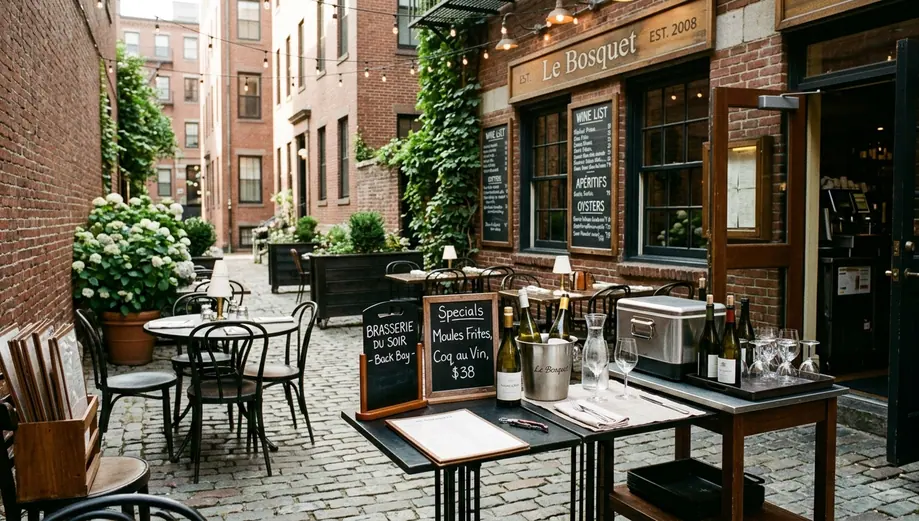
I treat patio booking as a small pre-dinner audit, not a romantic impulse. That sounds formal for a plate of fries and a glass of Sancerre, but it prevents the common Boston mistake: choosing the first exterior table available, then discovering that the setting fights the meal.
This guide is for diners who want brasserie-style comfort outside, not merely a chair in open air. It is especially useful for visitors, date-night planners, family hosts, and anyone using boston dining guides to choose between charm and comfort before the credit card goes down.
First, Decide What “Outdoor” Actually Means
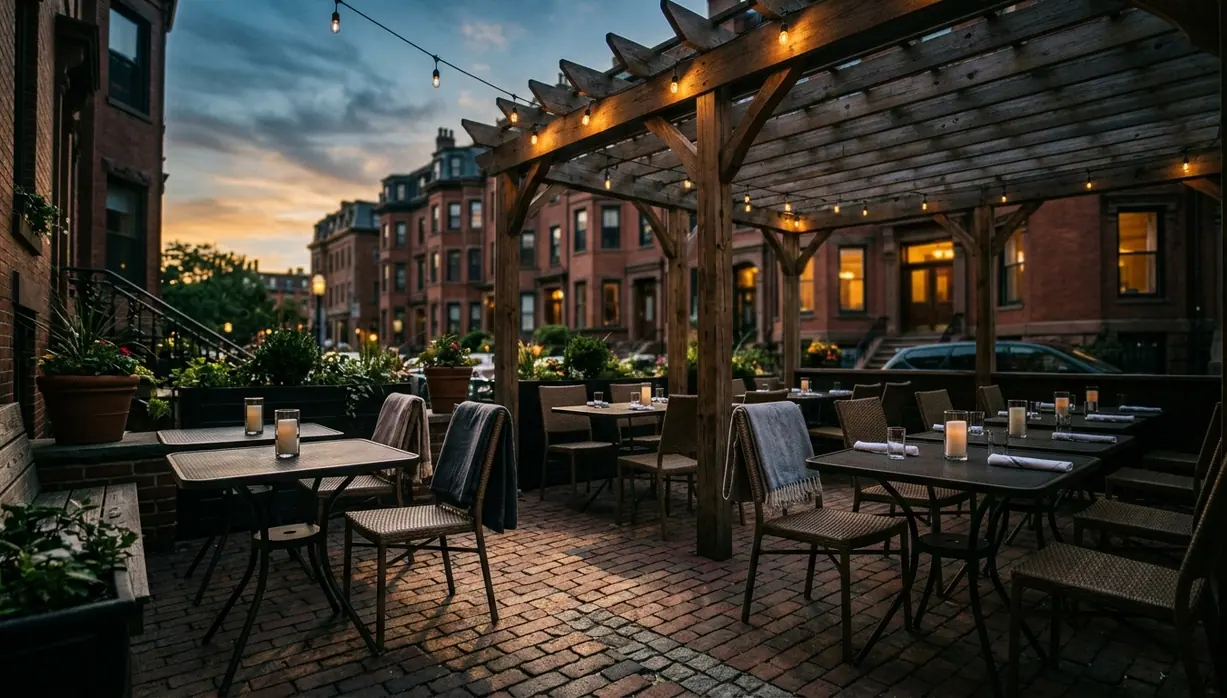
Outdoor dining is not one category. A sidewalk two-top, a curbside parklet, an enclosed patio, a rooftop terrace, a courtyard, garden seating, and a tented area all behave differently during the same service.
Compare the exposure, not the label
- Sidewalk seating: closest to foot traffic, street sound, and wind. It can feel lively, but the table depends heavily on curb layout and pedestrian clearance.
- Curbside parklets: often more structured than sidewalk tables, though exposure to traffic and street noise remains part of the experience.
- Enclosed patios: usually better for wine & pairings and longer meals because glassware, bread plates, sauces, and menus have more protection.
- Rooftop terraces: attractive in photos, more vulnerable to wind and temperature shifts.
- Courtyards and garden seating: often quieter, with better separation from street rhythm, though shade can make them cool quickly.
- Tented areas: useful in drizzle, but ventilation, heater placement, and noise vary sharply by setup.
A covered or heated area may still feel outdoors. Standard patio heaters can be powerful, often in the 40,000-to-48,000 BTU range, yet heat does not solve every problem. It will not soften traffic noise, stabilize a wobbly bistro table, or make a damp breeze pleasant during dessert.
Critical Insight: Restaurant photos are evidence, not proof. Images may show a clean afternoon setup, a seasonal layout, or a table that no longer exists once the city, the weather, or the reservation book changes.
Check the photos anyway. Look for umbrellas, overhead cover, planter walls, heater placement, pavement slope, table spacing, and whether the chairs sit inside a protected area or directly on the sidewalk. In Boston, sidewalk seating also has to preserve a clear pedestrian path; that practical requirement can shape how close your table sits to the passing crowd.
Read the Weather Like Someone Sitting Still
The daily high temperature is a poor guide to dinner comfort.
A pleasant walk through Back Bay can become a cool, static 90-minute meal once you sit down. Coastal air, quick temperature changes, and exposed street corners all matter more at table height than they do while moving. The mistake is checking the forecast like a commuter rather than a diner.
Focus on the dinner window
For a 6:00 PM to 8:30 PM service window, study the hourly forecast close to booking time and again the day of the reservation. The National Weather Service Boston forecast is a useful baseline because it separates the day into practical weather periods rather than one flattering headline number.
- Wind: gusts above the low-teens can turn napkins, menus, and delicate plates into work.
- Sunset drop: temperatures can fall noticeably after sunset, especially during the hour or so that often overlaps with dinner.
- Humidity: sticky air changes how rich food feels, particularly butter sauces, steak frites, and heavier reds.
- Drizzle: a mist that seems harmless on a walk can bead on menus, glasses, and coats.
- Shade: a shaded table at 4:00 PM and the same table at 6:30 PM can feel like two different reservations.
Recommendation: Check the forecast once when you book, then verify it again four to six hours before seating. That second check is the one that should influence shoes, layers, wine choices, and whether you call the restaurant.
Match the Patio to the Meal You Actually Want
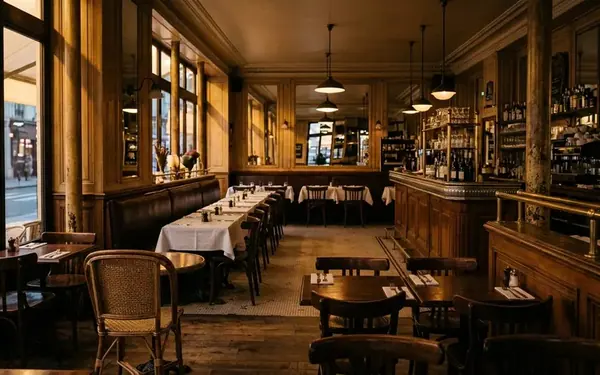
French brasserie culture rewards rhythm: bread lands, wine opens, seafood stays cold, sauces hold their texture, coffee lingers. Outdoor seating can support that rhythm beautifully, but only if the table fits the meal.
For quick drinks, a plate of oysters, or a casual lunch, a lively sidewalk table can be exactly right. The noise becomes atmosphere. The small table does not matter much. If the sun hits the wine for a few minutes, the meal still works.
A long, wine-focused dinner asks for more. Chilled white wines warm quickly in direct sunlight, and delicate sauces lose their appeal when the wind cools the plate. Multi-course brasserie meals commonly occupy a longer table window, so a table that feels acceptable for the first glass may feel exposed by dessert.
Use the menu as the test
- If the meal is seafood and aperitifs, prioritize shade and a table that does not wobble.
- If the meal is steak frites or roast chicken, prioritize wind protection so hot food stays enjoyable.
- If the meal is wine & pairings, prioritize shelter, glass stability, and enough quiet for conversation.
- If the meal is coffee and people-watching, sidewalk energy may matter more than perfect comfort.
Street energy has real value. Newbury Street foot traffic, clinking glasses, and the glow from a dining room can make seasonal french cuisine feel anchored in Boston rather than staged. The tradeoff is sensory competition: traffic, music spillover, and pedestrians may all enter the conversation whether you invited them or not.
The Questions to Ask Before You Commit
Before you reserve, ask the questions that booking platforms often compress into one vague seating note.
Pre-Booking Patio Verification Checklist
- Is the patio guaranteed, or is outdoor seating only a request?
- Does the outdoor tag mean a fully exposed sidewalk, a covered parklet, a courtyard, or a heated area?
- What happens if it rains during service?
- Will the restaurant automatically move the reservation indoors, or does indoor seating depend on availability?
- Are heaters available, and are they near every table or only part of the patio?
- Is there a strict time limit for the table?
- Are cancellation fees tied to a 24- to 48-hour window?
- Does the outdoor area accommodate mobility needs, strollers, canes, or weather-sensitive guests?
- Does the booking platform distinguish patio, standard, bar, counter, or high-top seating?
The phrase “request outdoor seating” deserves special attention. It is not the same as a guaranteed outdoor reservation. It may mean the host will try to place you outside if the room, staffing, and weather cooperate.
Risk Factor: A credit-card hold can make a vague patio request feel more secure than it is. Confirm the seating category before the cancellation window closes, especially for anniversaries, visiting parents, or pre-theater meals.
One practical script works well: “I see outdoor seating listed for this reservation. Is that a confirmed patio table, and what is the rain plan?” It is polite, specific, and hard to misunderstand.
Back Bay and Newbury Street Details That Change the Experience
Back Bay and Newbury Street outdoor dining has a distinct texture: brownstone shade, shopping foot traffic, narrow table choreography, curbside dining structures, visitors with bags, locals cutting across blocks, and hosts managing reservations in tight urban space.
That texture can be delightful. It can also make a special-occasion dinner feel more public than planned.
Timing changes the table
Early evening and late dinner do not simply differ by hour. Pedestrian flow often feels heaviest before the dinner room fully settles, while sunlight and temperature can shift quickly as the street moves into shadow. The stark version of this is a sun-drenched patio at 4:00 PM becoming a cool, shaded table after the sun drops behind a four-story brownstone.
Architectural shade can be useful when judging glare on back bay & newbury street blocks, but it has a limit: patterns that make sense along east-west corridors do not translate cleanly to north-south cross streets. That qualifier matters if you are choosing a table for older guests, a white-wine lunch, or a photo-heavy celebration.
Logistics are part of hospitality
Allow more time than the reservation confirmation implies. Parking, transit, ride-share drop-offs, brick sidewalks, dress shoes, raincoats, and shopping bags all affect how composed the table feels once everyone sits down. A five-minute delay is harmless at a casual lunch; before a theater curtain or a tasting-paced dinner, it can compress the whole meal.
For Newbury Street restaurants, I compare the outdoor table against the walk there. If guests will arrive warm, rushed, or weather-damp, a less exposed table usually beats the prettiest one.
When the Better Outdoor Dining Choice Is Indoors
Sometimes the smarter outdoor dining choice is to decline the patio.
That is not a failure of planning. It is occasion planning. Indoor seating may serve the meal better when conversation matters, when the pacing is formal, when wine service is central, when guests need accessible routes, or when the weather asks too much of the table.
Assess value, not just atmosphere
Exterior bistro tables can be compact, and a table that works for two glasses of wine may strain under bread, water, wine, entrées, sides, and coffee. Three to four courses need room and calm. If the restaurant enforces a shorter outdoor time limit, charges for late cancellation, or cannot promise a rain move, the patio’s atmosphere may not justify the trade.
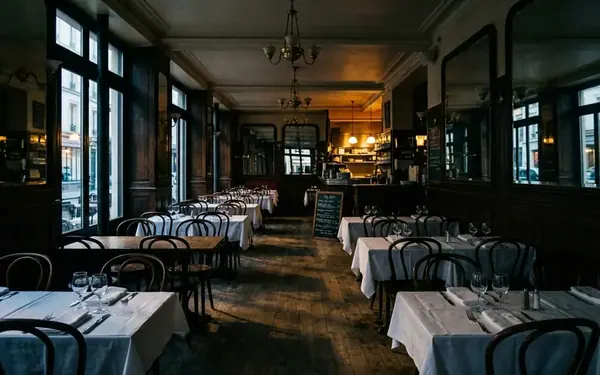
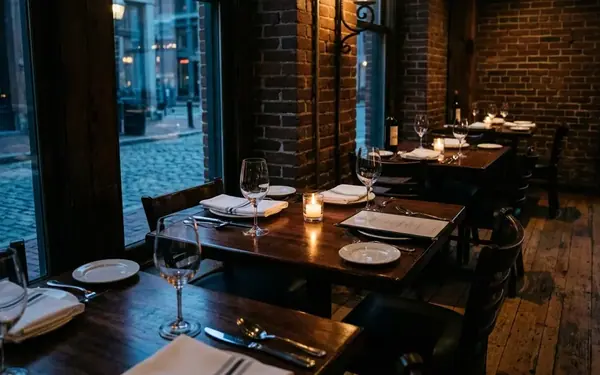
Indoor dining rooms also carry their own pleasures: polished pacing, steady glassware, warmer plates, reliable lighting, and a sound level shaped for service rather than traffic. For a birthday toast or a serious conversation, those details can be worth more than fresh air.
Critical Insight: Patio seating is not automatically superior. It is superior only when the table supports the purpose of the meal.
Use One Rule Before You Reserve
A good Boston patio plan does not need to be elaborate. It needs one final pass before you commit.
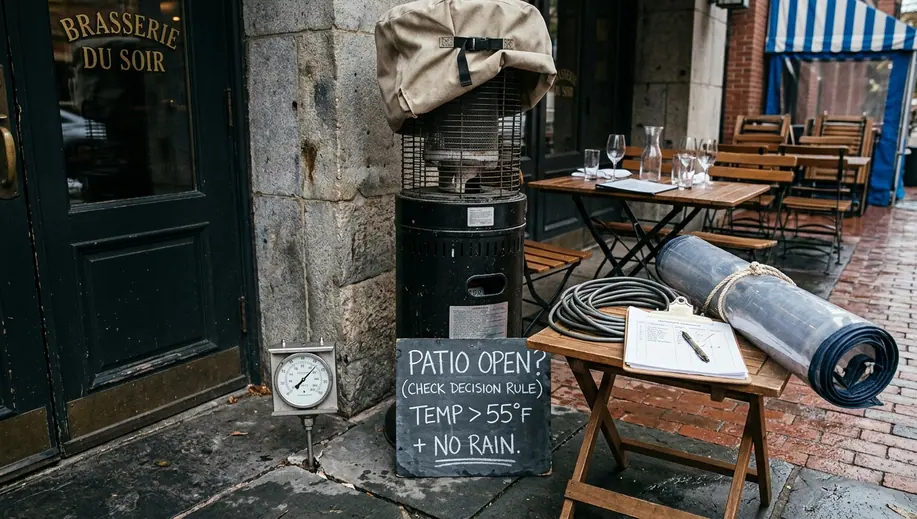
The three-part rule
- Confirm the patio type. Sidewalk, parklet, courtyard, rooftop, tent, and enclosed patio are different dining rooms in practice.
- Check the dining-hour weather. Look at wind, temperature after sunset, drizzle, humidity, and shade during the actual reservation window.
- Match the table to the meal’s purpose. A quick oyster stop, a long brasserie dinner, a pre-theater meal, and an anniversary do not need the same patio.
Prime weekend exterior slots can book well ahead, which makes early planning useful. The final judgment, though, belongs close to dinner, when the weather and the occasion are both clear enough to compare.
Will this outdoor table make the meal easier to enjoy, or are you choosing it because it sounds better than it will feel?

Your Comment