
Choose the Wrong French Room, and the Evening Changes
A diner wants steak frites and a glass of Burgundy. The craving is simple, but the choice of venue dictates the entire rhythm of the night. Selecting between a polished, all-evening room and a compact neighborhood table fundamentally alters the pacing, the noise level, and the style of service.
Modern diners book tables based on menu flexibility and pacing, rather than historical origins in 19th-century Paris. A standard three-course French meal takes something like an hour and a half to just under two hours of seated time. Pre-theater dining windows usually run from around 5:00 PM to 7:15 PM. Trying to squeeze a leisurely, multi-course experience into a tight window creates friction. Conversely, stretching a quick bite across a three-hour reservation leaves dead space in the evening.
This guide does not police restaurant labels. Hospitality groups name their establishments whatever they wish. Instead, this provides a usable way to read menus, rooms, and service styles before securing a reservation, ensuring the chosen environment matches the intended occasion.
The Brasserie: A Big, Flexible Room Built for Long Service
A French brasserie operates as a large, public dining room associated with extended hours, a broad menu, and a lively mix of guests. The word itself ties back to brewing, but contemporary brasseries are defined by scale, consistency, and all-day hospitality rather than beer production.
Continuous service stands as the defining brasserie trait. Traditional brasserie operations run without a break from late morning through to closing near 11:00 PM. The large dining room functions as a logistical necessity for handling multiple meal types, from mid-afternoon snacks to late-night suppers.
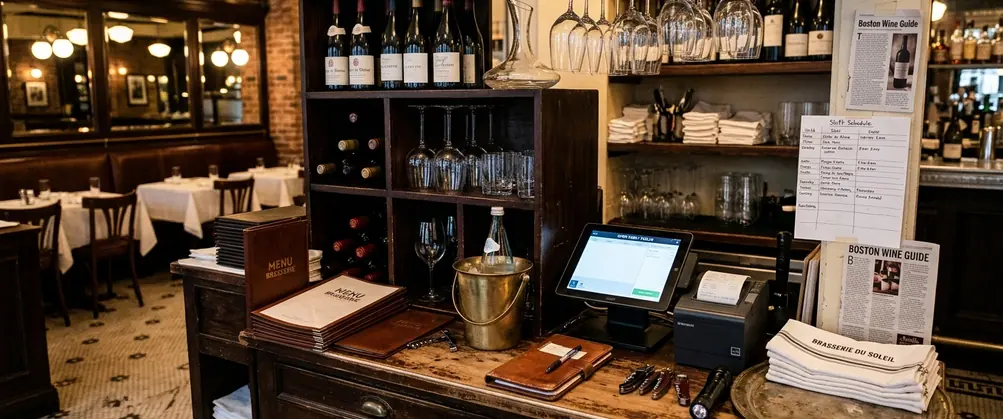
The menu architecture supports this flexibility. Menus tend to carry roughly ten raw bar selections and a handful of daily plats du jour to accommodate varying appetites. A guest can order a towering plateau de fruits de mer, a simple bowl of onion soup, or a composed roast duck. The kitchen is built to execute these diverse requests simultaneously, supported by a wine list deep enough to pair with both delicate seafood and heavy meats.
The Bistro: Smaller, More Personal, and Usually More Focused
Bistros offer a smaller, more intimate French dining room. They center on a tighter menu, neighborhood regulars, and a strong sense of the proprietor or chef. The environment feels personal rather than institutional. Service often leans conversational, lacking the choreographed, brigade-style formality of a grand brasserie.
A smaller kitchen footprint naturally restricts the breadth of the offerings. Bistro seating capacities generally fall somewhere between 35 and 50 seats. Menus are often tightly edited to a few appetizers and a handful of main courses, changing with seasonal availability. You will find classic, comforting dishes: rustic pâté, slow-cooked cassoulet, duck confit, simple green salads, and house-made tarts.
Critical Insight: The limited menu is a feature, not a flaw. It guarantees that the kitchen focuses entirely on a handful of proven preparations each night, reducing waste and ensuring high turnover of fresh ingredients.
Six Practical Cues That Separate a Brasserie from a Bistro
You can diagnose a restaurant's true category simply by scanning its website or looking through the front window. Apply these practical cues before booking.
First, check the hours. Brasseries support lunch, dinner, bar seating, and transitional dining. Bistros usually operate within tighter, segmented service windows, closing between lunch and dinner.
Second, evaluate the menu breadth. Brasseries offer a wide grid of choices across seafood, meat, salads, and snacks. Bistros edit aggressively.
Third, look at the beverage program. Brasseries frequently pour fifteen to twenty wines by the glass to support diverse pairings. Bistros typically offer a curated selection of six to eight by-the-glass options.
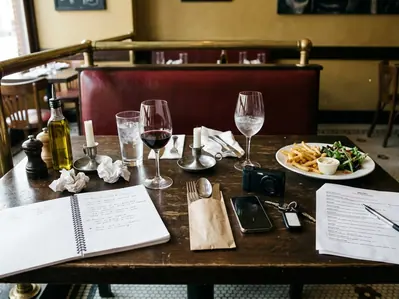
Fourth, observe the seating arrangement. Brasseries feature expansive bars, sweeping banquettes, and varied table sizes. Bistros maximize a small footprint with tightly packed two-tops.
Fifth, note the daily specials. Brasseries print formal plats du jour. Bistros often rely on a handwritten chalkboard.
Sixth, gauge the atmosphere. Brasseries generate a steady, bustling hum. Bistros cultivate a cozy, sometimes boisterous, neighborhood energy.
Brasserie vs. Bistro: Quick Diagnostic| Operational Cue | Brasserie Behavior | Bistro Behavior |
|---|---|---|
| Service Hours | Continuous (late morning to late evening) | Segmented (Lunch/Dinner shifts) |
| Menu Breadth | Extensive (Raw bar, multiple proteins) | Curated (a few apps, a handful of mains) |
| Wine by the Glass | Fifteen to twenty options | Six to eight options |
| Seating Capacity | 100+ seats | 35 to 50 seats |
How the Difference Shows Up Around Boston and Back Bay
Back Bay features a high concentration of mixed-use foot traffic. Hotels, offices, and retail spaces create conditions that reward restaurants capable of handling different tempos. Visitors and locals choose French restaurants here for pre-theater meals, business dinners, and weekend celebrations.
A well-run brasserie in a commercial district can accommodate a quick business lunch or a two-and-a-half-hour celebratory dinner at adjacent tables. Peak evening foot traffic in this neighborhood tends to land between 6:00 PM and 8:30 PM. During this rush, a polished room welcomes a couple at the bar, a table of colleagues, and a visiting family simultaneously.
While this framework applies strictly to traditional French service models, it provides a reliable baseline for setting expectations. Expecting a quiet, romantic anniversary dinner at a 150-seat brasserie during the 7:00 PM Friday rush leads to disappointment. The room is designed for energy, not isolation.
One catch exists. Applying these traditional French definitions to the local dining scene breaks down in districts dominated by Italian or contemporary American service models, where pacing and menu structures follow entirely different rhythms.
When the Label Misleads: Hybrids, Marketing, and Modern French Dining
Restaurant labels are flexible. A place can call itself a bistro while behaving like a brasserie, or borrow brasserie décor while running a very narrow bistro menu. Large hospitality groups often adopt the word 'bistro' to signal approachability, even when operating a massive, high-volume dining room.
Dining rooms exceeding 100 seats rarely function with true bistro intimacy, regardless of the name on the awning. High-volume hybrid restaurants often enforce strict 90-minute table limits during peak Friday and Saturday services. This directly contradicts the leisurely, proprietor-driven ethos of a traditional bistro.
Risk Factor: Booking a 35-seat neighborhood bistro for a party of eight with diverse dietary restrictions, resulting in a strained kitchen and limited options. A small kitchen cannot easily pivot to accommodate multiple off-menu requests.
To test a restaurant's true nature, look past the name. Examine the reservation availability, the table spacing, and how the restaurant describes its own occasions. If the venue promotes private dining rooms and corporate event packages, it operates as a brasserie.
A Copyable Dinner Plan: Brasserie or Bistro Tonight?
Two diners in Back Bay want French food before an 8:00 PM performance. One person craves seafood; the other wants steak frites. They both want a glass of wine, but they cannot risk a long, unpredictable tasting-menu experience.
Recommendation: Choose the brasserie. The menu breadth directly solves the problem of mixed diner preferences under a strict time constraint.
- Calculate the Timeline: For an 8:00 PM curtain, orders must be placed by 6:15 PM to ensure a comfortable departure by 7:40 PM. Book the table for 6:00 PM.
- Work with the Kitchen Design: A brasserie kitchen is built to fire a raw bar starter and a steak frites main in roughly twelve to fifteen minutes. The cold station handles the seafood instantly, while the grill station manages the steak.
- Order Strategically: Request the wine and the raw bar items immediately upon sitting down. Hold the steak frites order until the starters arrive, ensuring the hot food does not crowd the table.
- Settle the Bill Early: Ask for the check when the main courses are cleared, rather than waiting for the dessert menu. This guarantees an optimal exit time, leaving a comfortable twenty-minute walk to the theater.

Your Comment