
Why Restaurants Feel Different After Dark
The French brasserie evolved as an all-day dining room. Historically, these spaces served as neighborhood anchors where the doors stayed open from morning coffee through late-night supper. Today, while the continuous service model remains in parts of Paris, Boston and Back Bay dining culture has fractured the day into distinct operational blocks. Business lunches, pre-theater dinners, weekend visitors, and wine-focused evenings all demand different things from the exact same room.
The address, the chef, and the service team remain identical. Yet the guest experience transforms entirely between the 11:30 AM to 3:00 PM lunch service and the 5:00 PM to 10:30 PM dinner service. A restaurant at noon operates on a fundamentally different frequency than that same restaurant at eight o'clock.
The Quick Answer: Lunch Is Clarity, Dinner Is Atmosphere
Daytime dining prioritizes efficiency and illumination. Lunch tends to be brighter, faster, and highly decision-efficient. It provides a good environment for focused conversation, business interviews, or a limited schedule. A standard two-course lunch runs roughly 45 to 55 minutes from seating to departure.
Evening service shifts the priority toward immersion. Dinner moves slower, leans heavily into atmospheric elements, and centers around wine progression. It suits celebrations, lingering, and richer pacing. A standard three-course dinner stretches to around 90 to 120 minutes.
Critical Insight: Choose lunch when the meal has a purpose; choose dinner when the occasion is the purpose.
The Menu Changes More Than the Dish Names Suggest
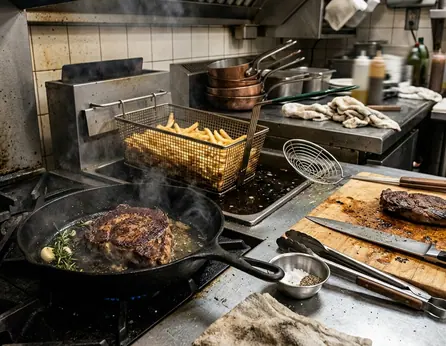
Watching Back Bay dining rooms over several years shows how kitchens adapt their output for the clock. Lunch menus arrive highly edited, practical, and price-sensitive. Dishes are built for shorter visits and lighter appetite patterns. A classic salade niçoise, a streamlined onion soup, or a plate of fresh oysters fits the midday rhythm perfectly.
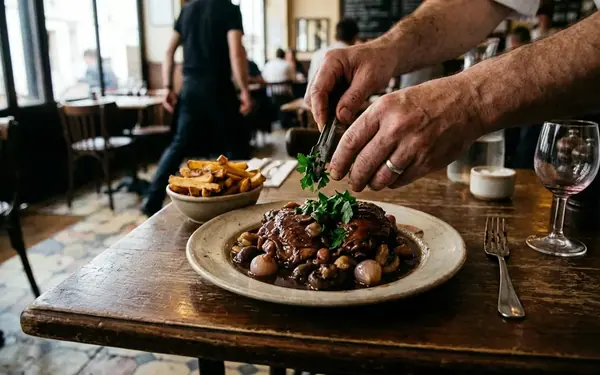
Dinner menus expand into ceremonious territory. The kitchen introduces richer sauces, fuller proteins, and dedicated cheese or dessert services. Even when a dish appears on both menus, the execution scales up. A kitchen might plate a 6-ounce bavette steak at lunch, then transition to a 10-ounce entrecôte for dinner service. The complexity of the plate also shifts. Midday presentations typically feature 3 to 5 components per dish, whereas evening presentations expand to 7 to 9.
Pacing: The Hidden Difference Most Diners Feel First
Lunch service prioritizes timing cues. Front-of-house staff deliver prompt greetings, facilitate faster ordering, and present the check cleanly without prompting. Ticket times for lunch entrées run around 8 to 12 minutes. Servers drop the check within a few minutes of plate clearance, recognizing that midday guests often face hard stops.
Dinner service creates permission to linger. The progression includes cocktails or aperitifs, deliberately staged courses, bottle service, and dessert. Main course ticket times extend to roughly 18 to 24 minutes. After dessert, service teams routinely allow 15 to 20 minutes of lingering before presenting the bill. While our observations focus strictly on independent brasseries rather than hotel dining rooms, this pacing divergence remains clear across the sector.
Guest behavior shapes this rhythm. Lunch parties signal urgency through posture and rapid ordering. Dinner parties signal openness. But pre-theater dinner windows (5:00 PM to 6:30 PM) often mimic lunch pacing due to strict curtain times, disrupting the usual relaxed evening rhythm.
Light, Noise, and Table Energy Recast the Same Dining Room
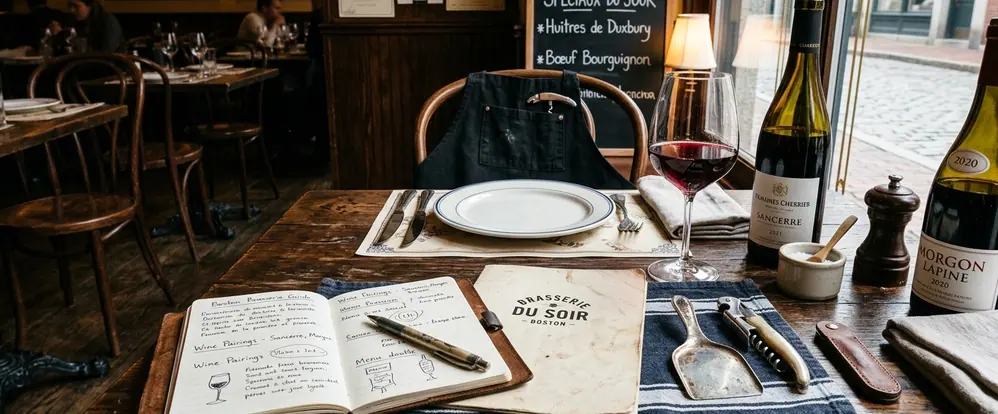
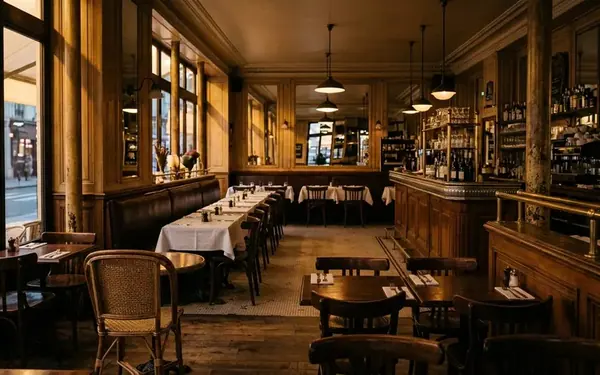
Daylight acts as a magnifying glass. Lunch is visually revealing. Natural light exposes room details, table spacing, plate presentation, and the mechanics of the service team. Guests can clearly see the neighborhood just outside the windows. This clarity makes lunch better for family check-ins or visitors who want to observe the room and the city clearly.
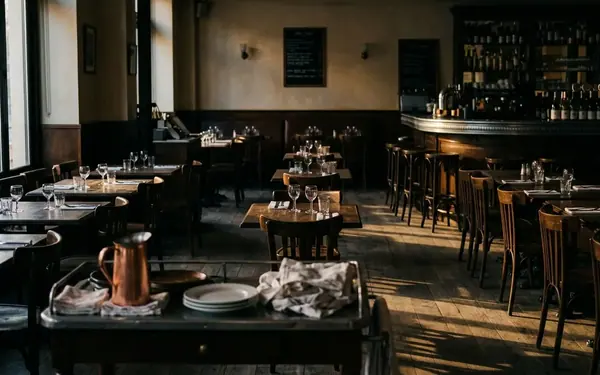
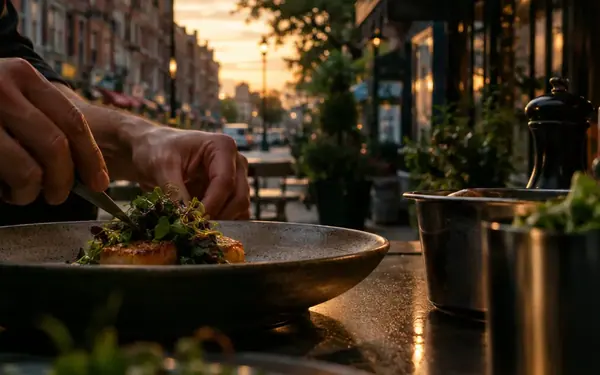
As the sun sets, the room becomes sensory and theatrical. In the late afternoon, dining rooms transition from natural daylight to warm LED table lamps. The visual focus shrinks to the immediate table. Coats pile on banquettes, the bar movement increases, and a stronger sense of occasion takes over. Management typically nudges up the background music a few decibels after 6:00 PM to match the rising ambient noise of a full room.
Timing within these blocks matters. Assuming a 2:00 PM late lunch will have the same bustling, energetic atmosphere as a 12:30 PM peak seating is a mistake. The late afternoon brings a distinct lull before the evening reset begins.
Wine Pairing Behaves Differently at Noon and at Night
Daytime pairings reward restraint. Workday obligations, afternoon plans, and driving constraints dictate a lighter approach to alcohol. A glass of Muscadet with oysters, a chilled Beaujolais with charcuterie, or a crisp Sancerre alongside goat cheese provides a proven match without overwhelming the afternoon. Beverage directors adapt to this reality by offering 3-ounce half-pours or 5-ounce standard glasses at noon.
Dinner supports broader, heavier wine decisions. The constraints of the day lift, allowing for slower progression through full bottles. Evening menus invite red Burgundy-style pairings for roast chicken or Rhône-influenced choices for heavier steaks. After 6:00 PM, the beverage program expands into small digestif pours and dedicated dessert wines, matching the heavier, lingering nature of the meal.
Value Depends on What You Need the Meal to Do
Lunch delivers functional value. It provides access to a respected kitchen, a polished room, and a satisfying meal without committing to the time or breadth of dinner. You experience the culinary baseline of the restaurant efficiently.
Dinner delivers experiential value. The atmosphere, the deliberate pacing, the depth of service, and the emotional weight of the occasion justify a higher spend. Hidden costs naturally accumulate during evening service. Extra courses, pre-dinner cocktails, full bottles of wine, rideshare timing, parking fees, and dessert all make dinner feel meaningfully different on the final receipt.
Risk Factor: Relying on lunch menus for budget dining fails during major holiday weeks in December, when many neighborhood kitchens switch to a unified, higher-priced all-day holiday menu.
When to Choose Lunch, and When to Choose Dinner
Selecting the right reservation requires matching the operational reality of the restaurant to your specific needs. Choose lunch for clarity, daylight, efficiency, easier conversation, and lighter ordering. Choose dinner for mood, wine exploration, celebration, and the desire to linger over a table.
Recommendation: Use lunch for a first-time evaluation of a restaurant. Daylight, calmer pacing, and shorter menus make service and cooking easier to observe.
The logistics of securing a table also differ. A weekday lunch usually needs booking a few days ahead. Prime Friday dinner slots can require reservations two to three weeks out. To fully understand a neighborhood brasserie, book a Tuesday lunch table this week to evaluate the kitchen's baseline technique, then secure a Friday evening reservation next month to experience the room's full theatrical energy.

Your Comment