
The First Clue Is Steam on the Window
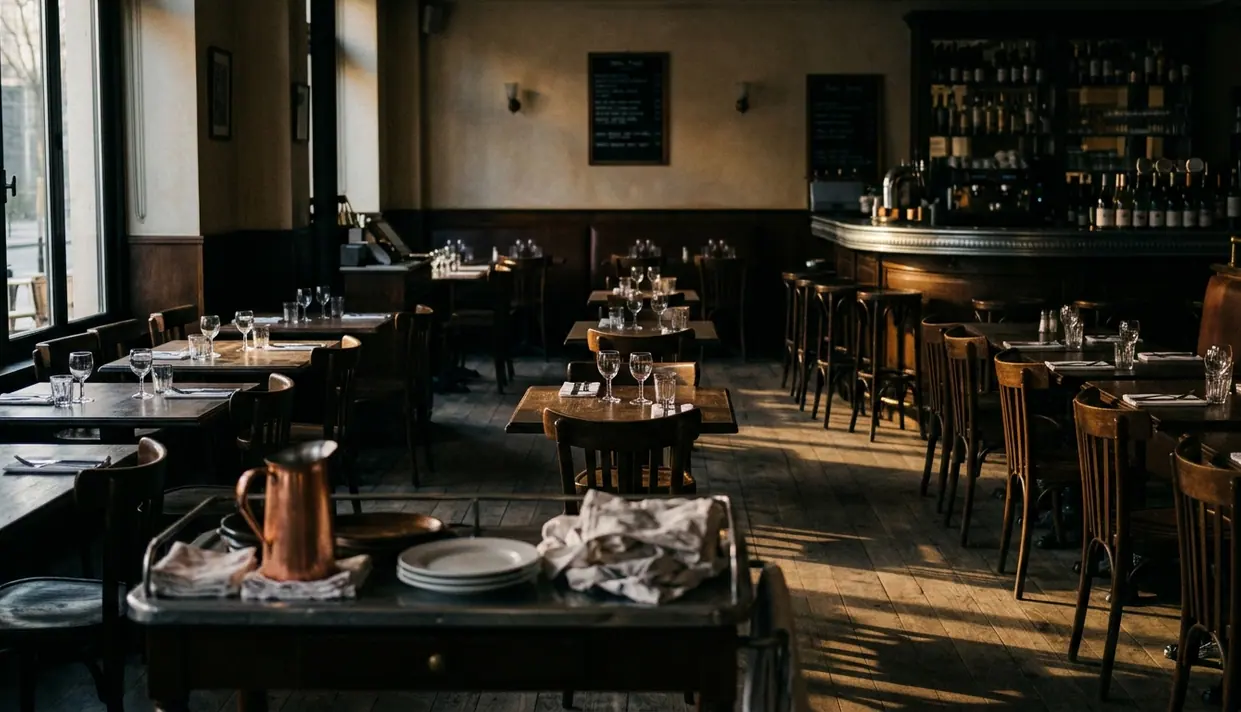
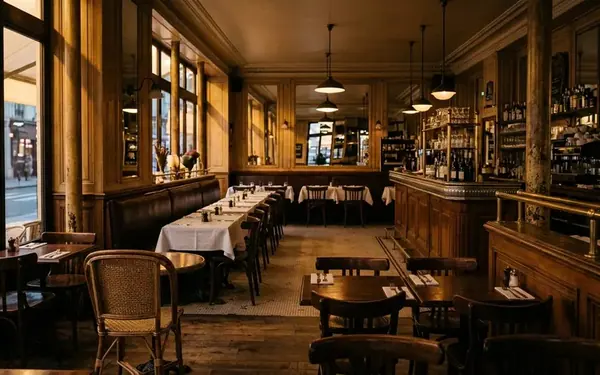
Step off Newbury Street on a cold evening and the transition is immediate. Condensation fogs the front windows, blurring the streetlights outside. Inside, the dining room smells of toasted Gruyère, reduced wine, and caramelized onions. A server navigates the tight floor space, describing a braised lamb special to a corner booth. This sensory shift is the first indicator of a seasonal menu transition, long before you read the printed card.
French brasserie culture relies heavily on continuity. Diners expect certain staples to anchor the room regardless of the month. Yet the most compelling dining rooms execute a quiet evolution driven by weather, market availability, and shifting diner appetites. You can read this evolution in the weight of the sauces, the choice of garnishes, and the emphasis of the wine list.
Physical environment dictates menu longevity. A Back Bay brasserie exposed to windy harbor drafts may keep French onion soup on the menu three to four weeks longer than a similar concept located further inland. Temperature tracking at the front of the house bears out as much; zinc bar surfaces near the entryway drafts dropping into the low 60s Fahrenheit between late November and mid-March necessitate dishes that radiate and retain heat.
Winter Menus Lean on Heat, Time, and Depth
Cold-weather cooking in a French kitchen is an exercise in patience. The winter brasserie pattern shifts away from à la minute preparations and leans heavily into braises, gratins, and deeply reduced stocks. Plates arrive heavier, anchored by root vegetables, potatoes, and earthy mushrooms.
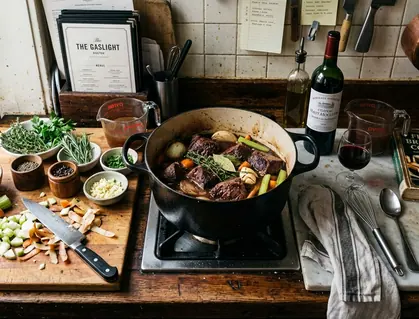
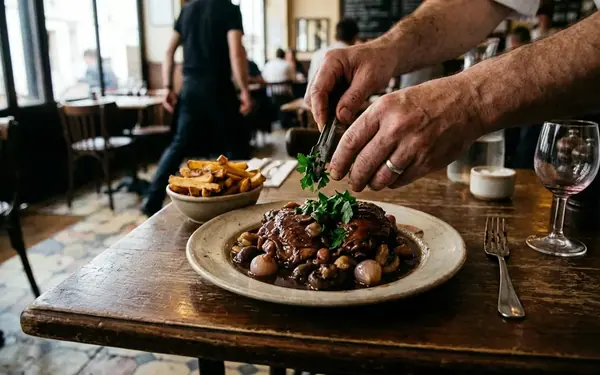
Classic preparations like soupe à l’oignon, boeuf bourguignon, and cassoulet-style beans dominate the cold months. Duck confit replaces lighter poultry, while desserts shift toward warm, caramelized profiles like tarte Tatin. These dishes succeed in winter because they reward slow, methodical cooking. They hold warmth on the plate during the journey from the kitchen pass to the table, and they provide the necessary structural weight to pair with full-bodied red wines.
The mechanics of the kitchen change entirely to support this depth of flavor. Culinary logs detail the time investment required: veal stock reductions simmering the better part of a day to achieve proper demi-glace consistency for peppercorn sauces through the depths of winter. This extended reduction process builds the foundational architecture for the heavier sauces that define winter dining occasions.
The Menu Changes First at the Margins
Seasonal transitions rarely happen overnight. A kitchen does not simply discard its winter identity on the first warm day of spring. Instead, the menu changes at the margins. The shift begins with garnishes, daily specials, and side dishes before the core entrées evolve.
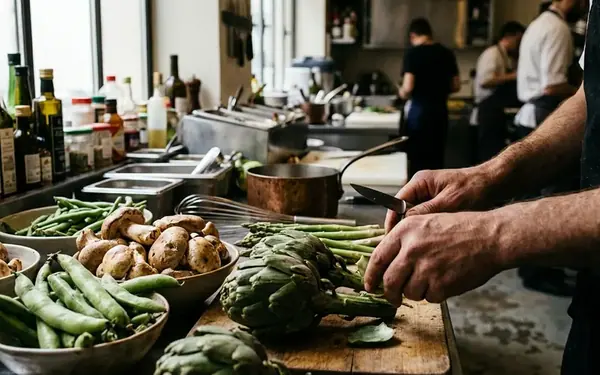
Shoulder-season signals appear subtly. Asparagus replaces roasted root vegetables alongside a standard protein. Fresh herbs feature more prominently in plating. Vinaigrettes begin to lighten the overall composition of a dish, and seafood specials appear with greater frequency. This gradual approach allows the kitchen to balance expectations. Regulars still find their expected staples, while the chef uses the specials board to test brighter, market-driven concepts.
Kitchen pacing records illustrate this transition phase. A couple of daily specials featuring early spring produce serve to gauge diner interest from mid-March to late April. Chefs monitor which specials sell out to determine when the dining room is ready for the full summer menu.
Risk Factor: Assuming a spring menu launch means immediate access to local tomatoes often results in kitchens importing subpar hothouse produce until late July. Diners seeking peak flavor should cross-reference menu additions with resources like the USDA Seasonal Produce Guide to ensure the kitchen is using truly seasonal ingredients rather than rushing the calendar.
Summer Brings Acid, Herbs, Seafood, and Speed
When summer fully arrives, the vocabulary of seasonal French cuisine changes. The heavy reductions vanish, replaced by chilled seafood, composed salads, and ratatouille-style vegetables. Grilled dorade or trout takes precedence over braised meats. Roast chicken is finished with bright herbs rather than heavy cream, and desserts pivot to fresh berries and sorbet.

The underlying culinary technique shifts from slow extraction to rapid execution. Quick grilling, poaching, and marinating replace the long simmers of winter. Sauces rely on vinaigrettes, citrus, beurre blanc, or simple pan juices. Dishes like salade niçoise, moules marinières, and raw oysters define the summer dining experience.
This change in technique drastically alters the rhythm of the kitchen. Service metrics highlight the acceleration: grill station ticket times dropping to roughly ten minutes per entrée for lighter fish and poultry dishes through the summer stretch. The entire brigade moves faster, matching the lighter, more energetic atmosphere of a summer evening.
Critical Insight: A brasserie's signature steak frites will remain on the menu year-round, meaning the kitchen must maintain a heavy red meat station even during peak summer heat. The presence of this dish is a requirement of the genre, not a reflection of the season.
The Wine List Tells the Same Seasonal Story
Beverage programs mirror the kitchen's evolution. The logic of wine and pairings shifts to complement the weight and acidity of the seasonal plates. Winter demands structure and tannin. Burgundy-style reds, spicy Rhône blends, and full-bodied Bordeaux dominate the tables, supported by richer, oak-aged whites and fortified dessert wines.
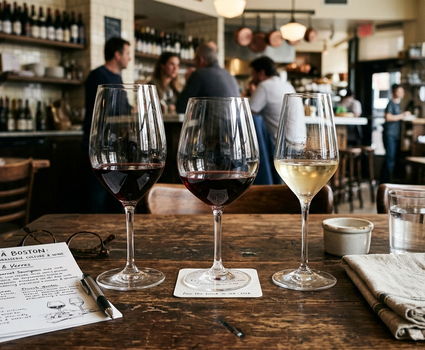
Summer requires a different approach. Champagne and crémant flow more freely. The white wine selection leans heavily into Muscadet, Sancerre, and Chablis—wines with the necessary minerality and acid to cut through chilled shellfish and vinaigrette-dressed salads. Red wine drinkers shift toward lighter Beaujolais or chilled, fruit-forward reds.
You can read the season simply by looking at the structure of the by-the-glass list. Beverage directors use this section to quickly adapt to the kitchen without overhauling the entire bottle cellar. Inventory adjustments confirm this strategy, showing the by-the-glass pours skewing toward a half-dozen crisp whites and rosés against a handful of reds through the summer months. When the crisp whites outnumber the heavy reds, the kitchen has fully committed to summer.
How to Read the Menu Before You Order
Navigating a brasserie menu requires looking past the permanent fixtures to spot the seasonal intent. Start by scanning the specials board. Identify the dominant vegetables accompanying the main courses. Note the language used to describe the sauces—words like "reduction" or "glace" signal winter holdovers, while "citrus," "herb," or "emulsion" point toward summer.
Compare the seafood presence against the heavier meats, and always check the balance of the wine-by-the-glass list. The most accurate information, however, comes directly from the staff. Front-of-house operations prioritize this knowledge transfer; a short pre-shift briefing walks servers through new seasonal garnishes and wine pairings as part of daily operations.
Recommendation: Ask the server specific, targeted questions. Inquire which dish is the most seasonal that evening, what garnish changed most recently, or which specific wine is currently being poured to match the seafood specials.
Do not assume that a seasonal dish is automatically superior to a year-round staple. A brasserie builds its reputation on consistency, and the signature dishes define the restaurant's identity. However, if you want to experience the kitchen operating at its most dynamic, you must order the dishes that reflect the current weather outside the dining room windows.
Next time you sit at a brasserie table, open the beverage menu before you look at the food. Count the white wines poured by the glass, note the dominant citrus or stone fruit notes in the tasting descriptions, and let that ratio decide whether you order the braised short rib or the grilled dorade.

Your Comment