
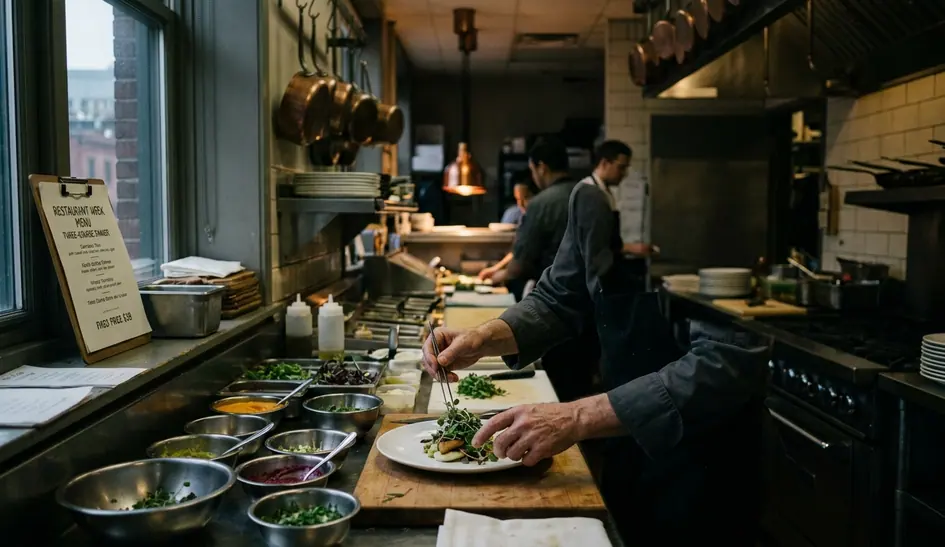
Start With the Fixed-Price Reality
Boston Restaurant Week now operates as Dine Out Boston, a seasonal promotional event where participating establishments typically publish their three-course menus two to three weeks before service begins. You can view these advance listings on the official Dine Out Boston page. Standard promotional pricing tiers for dinner service run in the ballpark of $36 to $46 or $55, excluding beverages, local taxes, and gratuity.
A prix fixe menu often projects the illusion of a bargain. That perception holds true only if the restaurant, menu, timing, and appetite align with the actual evening you intend to have. Evaluating the promotional structure requires analyzing those advance menus with a focus on complete meal pacing rather than isolated discounts. The objective is not chasing the lowest apparent price. The goal is designing a meal that feels complete, well-paced, and worth reserving.
Choose the Restaurant by Occasion, Not Hype
Restaurant choice breaks down into specific occasion types: a date night, a catch-up dinner, a visitor itinerary, a solo bar meal, or a group dinner. Initial evaluations of promotional dining often attempt to rank establishments by the highest dollar-value discount. Practitioner accounts of Boston dining guides bear out as much—chasing pure discount percentages frequently directs diners to geographically inconvenient locations with rushed service.
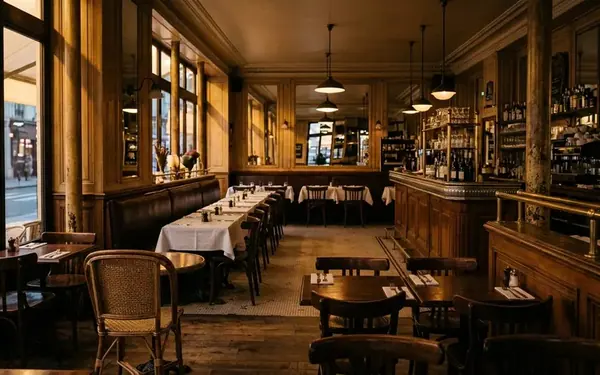
Back Bay and French brasserie settings provide a distinct logistical advantage during these weeks. The best selections sit within a few blocks of major transit stations, mitigating winter weather exposure. These venues offer polished service rituals, classic menu architecture, and wine-friendly dishes. A classic French brasserie menu requires a kitchen brigade accustomed to executing high-volume covers, often managing around 150 to 220 guests per evening during promotional weeks. Verify that the restaurant week menu reflects the kitchen's known specialties rather than a stripped-down version of its regular identity.
Read the Menu Like a Value Map
Scan the menu in three distinct passes. First, look for dishes you genuinely want to eat. Second, check for balance across the courses. Third, identify supplements and dietary restrictions. This three-pass approach prevents budget inflation by catching hidden upcharges on premium proteins.
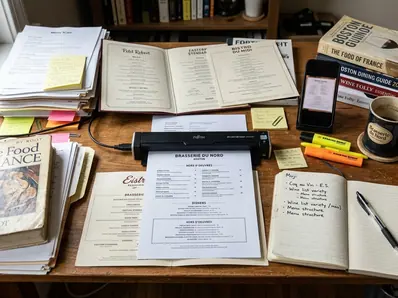
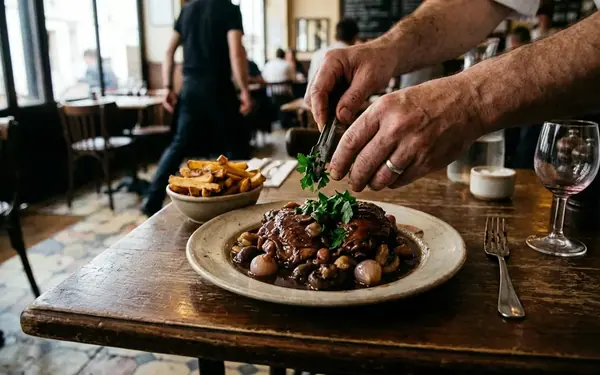
Visible value differs sharply from real value. Consider a diner booking a highly discounted prix fixe at a steakhouse but ending up with a $45 upcharge for a prime cut, negating the promotional value entirely. Supplemental charges for traditional brasserie items like steak frites or duck confit frequently add $8 to $15 to the base prix fixe cost.
An expensive-sounding entrée proves useless if it creates a heavy, mismatched meal. A balanced three-course progression should ideally limit heavy cream or butter-based sauces to a single course to avoid palate fatigue. Look for classic preparations that anchor the cuisine: onion soup, roasted chicken, mussels, seafood, crème brûlée, and cheese courses.
Book the Time Slot That Protects the Meal
Reservation timing dictates the rhythm of the experience. A standard three-course prix fixe meal needs roughly an hour and a half to two hours to ensure proper pacing between the starter and main course. Booking a table between 5:30 PM and 6:15 PM generally secures a quieter dining room before the peak volume hits around 7:00 PM.
Early seatings allow for more deliberate service. Contrast the difference in service pacing between a 5:45 PM Tuesday reservation and a 7:30 PM Saturday reservation during the final weekend of the promotion. The former offers calm attention; the latter brings lively energy but less flexibility. Factor in pre-theater plans, workday fatigue, visitor schedules, and kitchen pacing when selecting a time. Call the restaurant or check the reservation notes to confirm availability, bar seating options, cancellation windows, and whether the special menu runs during every service.
Plan Wine Before the Prix Fixe Distorts the Budget
Drinks frequently determine whether a restaurant week meal retains its value after the check arrives. Comparing the final checks of diners who ordered full bottles versus those who selected targeted by-the-glass pairings reveals that the latter better preserves the promotional budget.
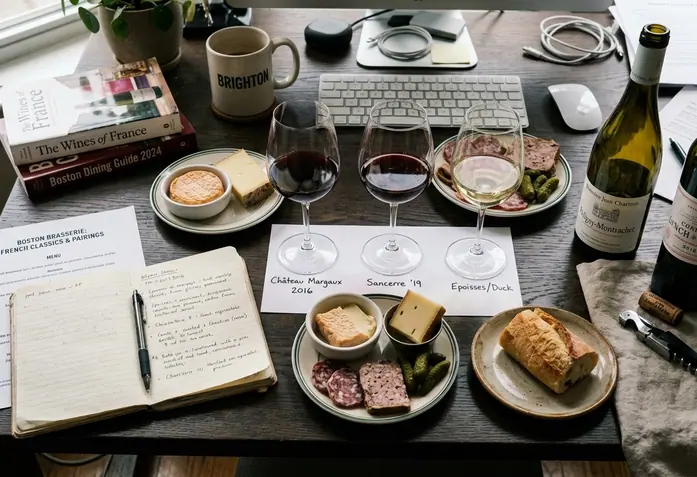
Standard by-the-glass pours in local French brasseries measure 5 to 6 ounces, with prices ranging from $14 to $19 per glass. Apply practical brasserie pairing logic. Pairing a crisp white wine with a seafood starter and a lighter red, such as a Beaujolais, with a roasted chicken main course keeps beverage costs in the ballpark of $28 to $38 per person. Fuller reds suit steak frites or duck. Ask the sommelier or server for a by-the-glass pairing that complements the main course rather than attempting to pair a different wine with every single plate.
Use a Five-Minute Reservation Checklist
Evaluating a menu and securing a reservation through standard booking platforms should take just a few minutes when using a structured criteria list. This rapid evaluation method was drawn from common diner complaints regarding unexpected costs and mismatched dining atmospheres during promotional weeks.
- Confirm the occasion: Ensure it matches the restaurant's typical atmosphere (e.g., intimate date vs. lively group).
- Verify the menu: Check that it contains at least one starter, main, and dessert you would order at full price.
- Calculate costs: Estimate the total likely cost including supplements, taxes, and gratuity.
- Check logistics: Review location convenience and post-meal plans.
Watch for immediate deal-breakers: only one appealing entrée, unclear supplement language, inconvenient timing, rushed group seating, or a menu disconnected from the restaurant’s strengths. Different diners make different correct choices. A visitor might prioritize atmosphere, while a local prioritizes a dish rarely offered at a lower set price.
Critical Insight: This five-minute evaluation method falls apart for parties of six or more, where mandatory gratuities of around 20% to 22% and restricted group menus supersede standard promotional pricing.
At the Table, Keep the Meal Intentional
Once seated, proactive communication with servers ensures you receive the kitchen's best execution rather than default high-volume preparations. Ask about daily specials or off-menu substitutions as soon as you place the beverage order, within a few minutes of arrival.
Try to finalize your three-course selections in the first ten minutes or so of seating, giving the kitchen adequate time to fire the first course. Ask what the kitchen is especially proud of that evening and confirm any supplement details. Pace your choices carefully. Avoid ordering the heaviest starter, entrée, and dessert unless a rich, decadent meal is the explicit goal of the night. Build the courses so they complement rather than duplicate richness. Maintain polite curiosity with the staff regarding wine, substitutions, and timing constraints.
Open your preferred reservation platform right now, filter for Back Bay brasseries offering the $46 tier, and secure a 5:45 PM Tuesday slot to test this pacing strategy firsthand.

Your Comment