
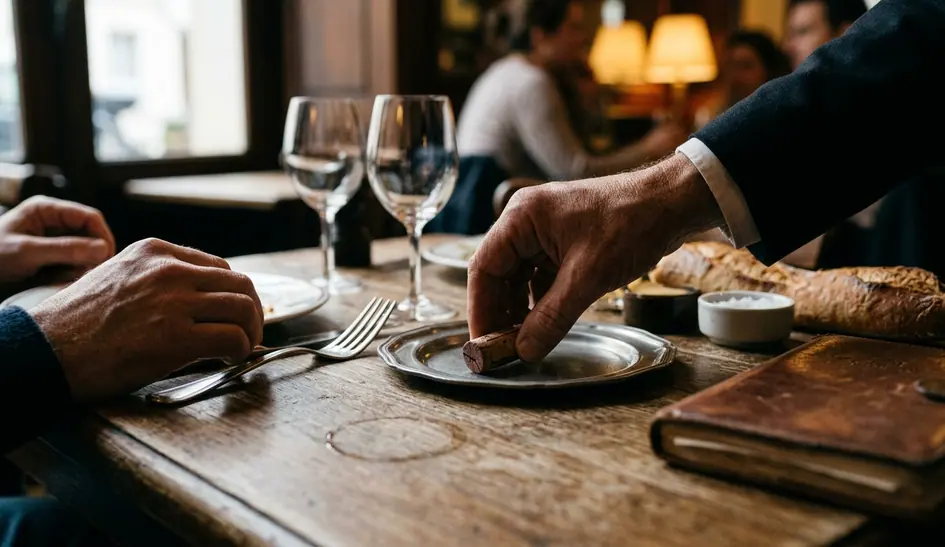
The Wrong Bottle Can Flatten a Great Brasserie Dinner
A confident brasserie table can unravel quickly when the menu lists familiar dishes but unfamiliar French regions. Diners often spend a few minutes reviewing a wine list before defaulting to a familiar but potentially clashing domestic style. The stakes are entirely practical. A heavy, low-acid red served too warm makes a delicate, butter-based beurre blanc sauce taste metallic and flat.
Framing the pairing around sauce weight rather than grape varietals saves the meal. French brasserie culture thrives on rich, layered flavors that demand structural balance from the glass. Treating the wine list as a tool for palate management rather than a geography test keeps the focus on the food.
The Brasserie Pairing Formula: Weight, Acid, Salt, and Sauce
Match wine weight to dish weight, use acidity to cut fat, let salt soften tannin, and follow the sauce before the protein. A standard brasserie peppercorn sauce contains heavy cream reduced for the better part of 20 minutes. This requires a wine with high acidity—a pH in the ballpark of 3.3 to 3.5—to cleanse the palate.
While this methodology applies strictly to traditional French brasserie menus, the underlying chemistry remains consistent across dining occasions. Tannic red wines require dishes with high protein and salt content to soften the astringency on the palate over the course of a meal. Loire whites, Champagne, Beaujolais, and many Burgundian styles work exceptionally well with seasonal French cuisine precisely because they deliver this necessary acid structure.
Critical Insight: Always pair to the most dominant flavor on the plate. A heavy sauce dictates the wine choice far more than the lean cut of meat underneath it.
Start with the Plate, Not the Grape
Identify the dominant feature of the dish before naming a wine. A filet of white fish takes on entirely different pairing needs when pan-seared in a bit of clarified butter versus poached in a court-bouillon for eight to ten minutes. The preparation method dictates the required wine structure.
Dishes featuring heavy char from a screaming-hot grill require wines with darker fruit profiles to complement the bitter carbon notes. Grape-name thinking misleads diners because region, producer, and style drive the bottle description. Matching preparation method over protein type is well documented in culinary pairing matrices. Understanding the INAO overview of French geographical indications helps decode these regional styles, but the plate must always drive the final decision.
Classic Pairings for Steak Frites, Mussels, Onion Soup, and More
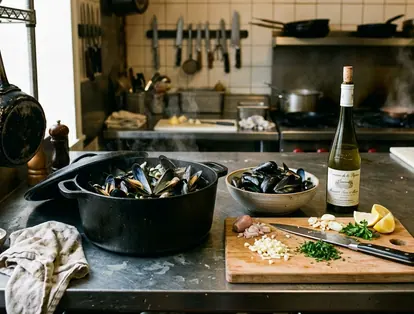
Serving oysters with a classic mignonette rested a day or two requires a bone-dry white served cold, roughly 45°F to 50°F, to avoid clashing with the acetic acid. A traditional French onion soup baked with Gruyère until bubbling pairs best with a lighter Rhône red to cut through the melted milk fat.
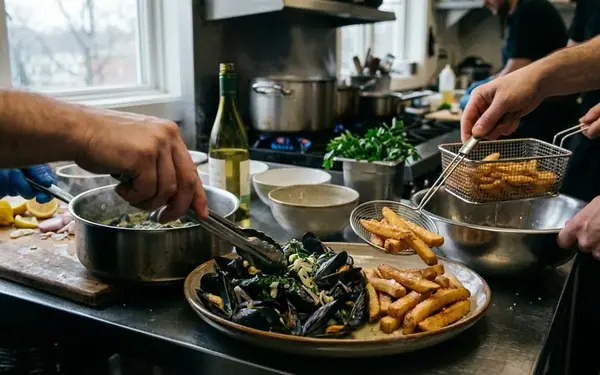
Steak frites demands a structured approach. Look to Bordeaux, Cabernet Franc from the Loire, or Syrah from the northern Rhône depending on the accompanying sauce and the level of char on the beef. Moules frites require Muscadet, Sancerre, Chablis, or dry sparkling wine, especially when garlic, herbs, and briny broth dominate the bowl.
French Regions You Can Actually Use at the Table
Organize regions by dining use rather than geography alone. The Loire Valley produces Cabernet Franc with moderate alcohol, generally in the 12.5% to 13.5% ABV range. This makes it highly versatile for both roasted poultry and lighter red meats. It provides a proven foundation for navigating a meat-heavy brasserie menu without overwhelming the palate.
Crémant undergoes a secondary fermentation lasting the better part of a year, producing fine bubbles that effectively scrub fried food oils from the palate. Burgundy offers Chardonnay and Pinot Noir for roast chicken, mushrooms, onion soup, escargots, and delicate meat dishes. Grouping these regions by their structural characteristics makes the wine list immediately actionable.
What Changes When You Order in Boston
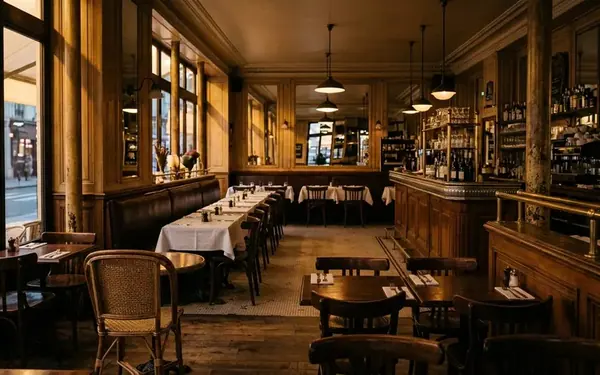
Back Bay and central Boston brasserie meals often combine seafood, steak, fries, raw bar items, and by-the-glass decisions at the same table. A typical mixed table might run through an appetizer course of local oysters and, an hour or so later, a main course of steak frites. This eclectic ordering style requires flexible wine choices.
Local brasseries frequently refresh their by-the-glass offerings every couple of weeks to match seasonal produce shifts. Many of these establishments maintain multi-year relationships with regional distributors to keep those rotations fresh and relevant to the current menu.
Risk Factor: Relying on a single transitional bottle for a highly varied table will inevitably compromise the pairing precision for the heaviest red meat dishes.
A Simple Script for Ordering French Wine with Confidence
Use a short, repeatable ordering script with the server or sommelier. Step one: name the dishes on the table, not just the wine style you usually like. Step two: identify the heaviest or most sauce-driven dish as the pairing anchor.
Offering a price comfort range of roughly $60 to $80 per bottle upfront saves several minutes of back-and-forth with the server. Naming the two heaviest dishes on the table gives the wine professional the exact structural parameters needed to narrow a long list down to two or three options.
Recommendation: State your price range and your main courses in the same breath. It gives the server everything they need to find the best value on the list.
Mistakes That Make French Wine Feel Harder Than It Is
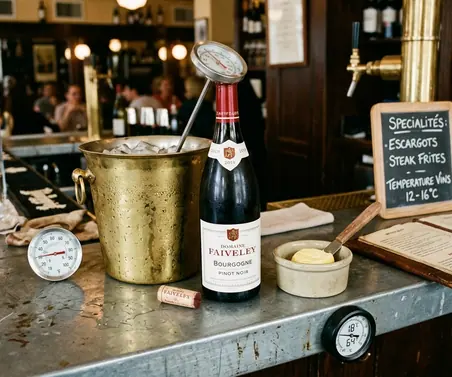
Choosing only by prestige often backfires. Famous appellations can be wonderful, but they may be too powerful, too subtle, or too expensive for the actual plate. Optimal pairings rely on structural harmony, not label recognition.
Temperature matters immensely. Serving a structured Bordeaux at a warm room temperature instead of the recommended 60°F to 65°F amplifies the perception of alcohol. High-tannin wines served too warm make the salt on standard brasserie frites taste metallic and overly bitter on the finish. Never automatically pair red meat with the biggest red on the list; sauce, doneness, salt, and sides dictate the match.
The Default Pour for the Mixed Table
Order a chilled Beaujolais for any mixed brasserie table. Served around 55°F, it carries enough red fruit character to complement roasted meats while keeping the acidity needed to cut through a quick pan-jus reduction. Wines with a pH shy of 3.4 hold their structural integrity across a two-hour dining window, even as the bottle slowly warms. This profile bridges the gap between rich sauces and varied proteins without overpowering delicate appetizers. Make this high-acid, moderate-body wine your guaranteed selection to anchor a diverse French menu.

Your Comment