
Asparagus is one of the few vegetables that will tell you, plainly and within one bite, whether a kitchen is paying attention. A spear at its peak snaps rather than bends, tastes sweet before it tastes green, and needs almost nothing done to it. A spear that has spent just over nine days in transit tastes like the idea of asparagus, and no amount of mustard in the vinaigrette will fix that.
The January Asparagus Problem
Here is the question I ask myself whenever a spring-priced vegetable shows up on a winter card: if asparagus sits beside a steak in January and reappears under a poached egg in May, is the kitchen treating it as a seasonal ingredient, or as an interchangeable green garnish that photographs well?
The distinction is not academic. Executive chefs who take the season seriously do not launch a spring menu by calendar. They watch regional soil temperatures, waiting for consistent readings around 50°F (10°C) before spears emerge with enough accumulated sugar to be worth the plate. In New England, that produces a genuine local harvest window of roughly mid-April through late May. Everything outside that window is a sourcing decision, and it should be an honest one.
My argument for the rest of this guide is narrow and practical. Asparagus earns a place on a French menu through three things: freshness measured in hours, a preparation matched to the variety, and a willingness to let the dish disappear when the stalks turn.
What Seventy-Two Hours Does to a Spear
Peak asparagus is not simply "green" on the palate. It carries a clean vegetal sweetness, a faint mineral bitterness at the tip, and a succulence that registers as much in texture as in flavor. That succulence is water held inside intact cells, and it leaves quickly. Improperly stored stalks can shed as much as 15 grams of water weight within 48 to 72 hours of harvest. Kitchens that care hold their walk-ins strictly between 36°F and 39°F for exactly this reason, and cooks snap the cut end of a sample stalk on arrival to read hydration by sound and resistance.
You can run a simplified version of that inspection at the table, or at a market stall:
- Tips closed and compact, without splaying florets
- Stalks firm enough to resist a gentle flex
- Cut ends that still look moist rather than chalky and cracked
- Even color along the length, no deep wrinkling or longitudinal splitting
Tired asparagus reverses each of these. The skin turns fibrous, the tips loosen, and the flavor flattens into something vaguely grassy. A kitchen receiving that product has two bad options: trim aggressively and lose yield, or cook longer and lose snap. Both show up on the plate.
One Cue, Two Vegetables
The tightly-closed-tip test works well for green and violet spears. White asparagus naturally shows a slightly looser tip structure even straight from the field, so judging it by that single cue will mislead you. Read the cut end and the weight of the stalk instead.
Three Colors, Three Sets of Rules
Green asparagus is photosynthesized asparagus: grassy, lightly bitter, quick to cook, and forgiving of high heat. White asparagus is the same plant grown under mounded soil or opaque covers, kept from light entirely. The result is milder, sweeter, denser, and considerably more demanding. Its exterior layers are fibrous in a way green stalks rarely are, so peeling begins about 1.5 inches below the tip and continues to the base. Thick spears of 16 to 22 millimeters take 8 to 12 minutes of blanching, a span that would reduce a pencil-thin green stalk to string.
Violet asparagus turns up less often and deserves a caution. The color can come from variety, from brief sun exposure on a blanched crop, or from anthocyanin development in particular cultivars, and the flavor ranges from delicate and nutty to nearly indistinguishable from green. A purple tint on the menu is not a guarantee of anything specific; it is an invitation to ask.
The sourcing calculus differs by color too. I know of menu teams that considered South American white asparagus for a winter service and walked away from it, judging that the textural collapse over a long transit outweighed the novelty of serving it in February. They waited for the European spring crop instead. That is the correct instinct: white asparagus travels worse than green, because everything that makes it luxurious depends on cell walls that are still plump.
Sauces That Sharpen Instead of Smother
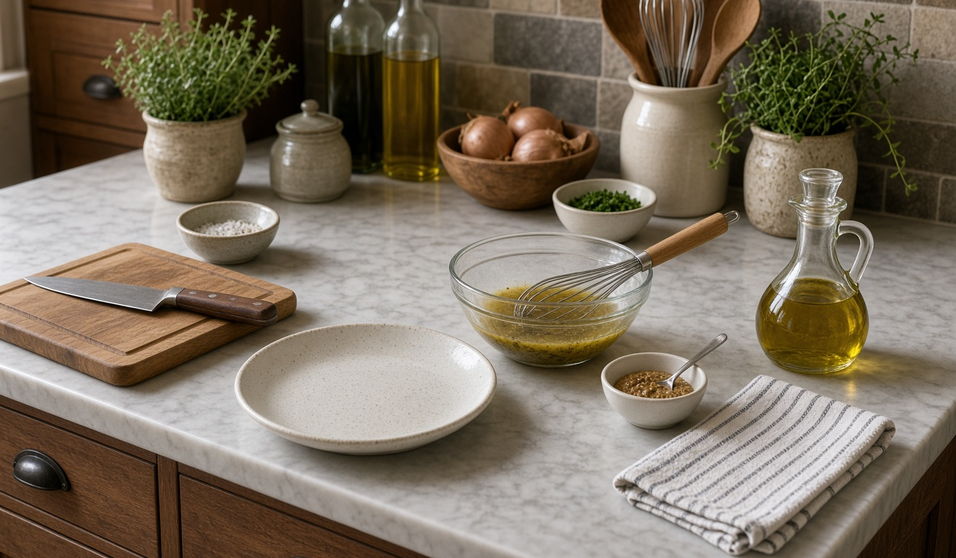
Asparagus vinaigrette is the cheapest quality test on any brasserie card. Acidity and mustard are supposed to cut the vegetable's sweetness and lift the bitter edge at the tip. When the stalks are dull, the same vinaigrette becomes camouflage, and you taste dressing with fibrous batons in it.
The warm preparations operate on the same principle of restraint. A softly poached egg, a sauce mousseline, a classic hollandaise, beurre noisette, or a hard roast in a very hot oven all add richness while leaving the spear's identity legible. What separates a good version from a careless one is timing under service pressure. Clarified butter for these emulsions is held around 130°F to 135°F, and expediters enforce a plating window of three to five minutes before a warm emulsion starts to congeal. An asparagus dish that arrives with a skin on the sauce has already told you how the pass is running.
Matching Method to Stalk
- Blanching preserves color clarity and snap; best for green spears of moderate thickness.
- Roasting concentrates sugars and adds a caramelized edge; rewards thicker green stalks.
- Gentle poaching suits peeled white asparagus, where even heat matters more than surface browning.
Reading a Spring Card in Back Bay
Walk into a Newbury Street dining room in late April and the menu will usually answer your questions before the server does. Look first for whether asparagus anchors a focused dish or merely decorates three others. Then note whether the kitchen names anything specific about it: a variety, a farm, a harvest day.
Transit from Pioneer Valley growers into Boston kitchens runs roughly 14 to 18 hours, which means a restaurant with real regional sourcing can tell you what arrived that morning. Good front-of-house managers brief servers on those changes at pre-shift, which moves the tableside conversation past the generic word "local." So ask two better questions: when did the asparagus come in, and is it green or white. A server who can answer both is working in a kitchen that logs its deliveries.
Other favorable signals: accompaniments that shift week to week, a short spring section rather than a permanent one, whole or deliberately cut spears instead of anonymous dice, and plating that leaves texture visible. Focused spring cycles built around the ingredient tend to run six to eight weeks, which is exactly as long as the ingredient justifies.
Asparagus in a Supporting Role
Off-season asparagus becomes defensible the moment it stops auditioning as the star. There is a real difference between a dish you order because of the asparagus and a dish where asparagus contributes body to a velouté, green to a purée, or structure to a vegetable garnish.
Winter chefs work this way deliberately, moving preserved and frozen product into secondary roles and rewriting recipes around its altered cellular structure. Commercial flash-freezing happens within four to six hours of harvest to limit ice crystal damage, and it produces something genuinely useful for soups and fillings while being wrong for a vinaigrette plate. Fresh imported stalks arriving after 9 to 14 days of transit need aggressive trimming of the dried ends before they are usable at all.
Distance itself is not a moral failing, and it is not a freshness credential either. Imported produce can be very good. What matters is whether the preparation matches the condition of what actually came through the door.
When the Dish Should Vanish
Late-season harvest temperatures above 75°F trigger rapid lignification, and the final 10 to 14 days of the growing season yield skins tough enough to resist normal peeling. Operators who care pull the dish then, even with demand still running. A brasserie that keeps selling asparagus into July is selling something else.
The Rainy April Table
Respecting the season is a flavor standard, not a decorative claim about tradition. The decision rule is simple enough to use tonight: order the asparagus when the stalks look fresh, the preparation is restrained, and someone on the floor can tell you what you are eating.
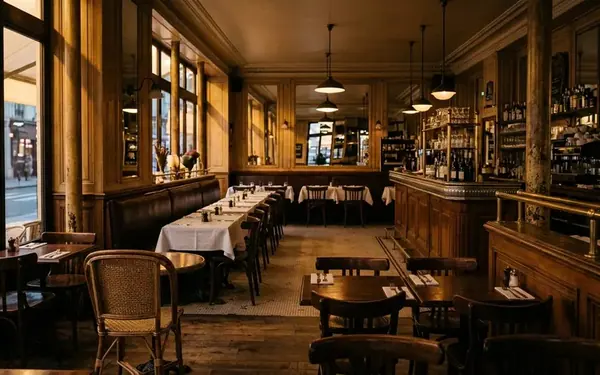
It is a wet Thursday in April in Back Bay, the windows fogged, the room loud in the comfortable way brasseries get around eight. A plate arrives: warm green spears, still glossy, a spoon of sharp vinaigrette pooled beneath them, an egg cooked just past liquid resting on top. The first spear breaks with an audible snap against the side of the fork. Sweet, faintly bitter at the tip, cool acid underneath. Six weeks from now that same plate would be a memory of itself, and the kitchen will have moved on. Which is precisely why it tastes like this tonight.



Your Comment