
Apples, Pastry, and the Question That Follows the Main Course
A French apple dessert is any sweet preparation that pairs apples with pastry, caramel, custard, or some combination of the three. That definition sounds tidy until two plates arrive side by side: one holding apples cooked so long in dark caramel that they turn translucent and amber, the other holding apple slices barely thicker than paper, browned at the edges on a crust that shatters under the fork. Both are apple tarts, yet they eat like different desserts.
When I planned this guide, I started with seven traditional fruit preparations and narrowed the list to four pastry-based formats. Poached compotes fell away because they lack the interplay between crust and filling that defines a classic brasserie finish. What remains is a practical decision for anyone finishing dinner in Back Bay or along Newbury Street: pastry texture, perceived sweetness, and serving temperature decide which apple dessert will satisfy.
The fruit itself sets the baseline. Brasserie pastry kitchens tend to work with firm, high-acid cultivars such as Reine des Reinettes, Granny Smith, or Golden Delicious, apples that hold their structure under high oven heat. In New England, local cold-storage and late-harvest orchard fruit peaks from late September through mid-November, right as autumn menus turn richer.
Tarte Tatin: Caramel Cooked Beneath a Lid of Pastry
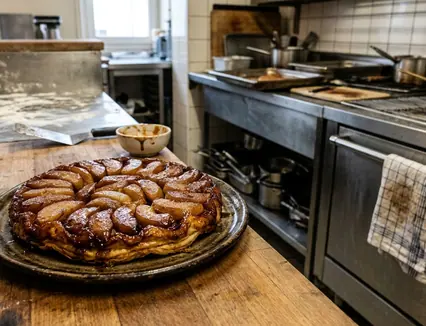
Tarte Tatin is built upside down. Apple halves or quarters braise in a base of dry-burned sugar and butter, then a docked disk of pâte brisée or puff pastry goes on top. Once baked, the whole tart is inverted, so the caramelized fruit lands on top and the pastry becomes the base.
The flip is a matter of timing. Kitchens watch how fast the bubbling syrup thickens after the pan leaves the oven, and the pan rests for 5 to 10 minutes so the molten caramel sets just enough to cling to the apples instead of pooling on the plate. Turn it too late and the caramel seizes in the cast iron.
On the plate, the appeal comes from contrast: tender, almost spoonable apple pieces against a firmer pastry base, with caramel that can run from honeyed to nearly bittersweet. Caramel intensity and sweetness are separate qualities. A deeply cooked caramel carries a pleasantly bitter edge that keeps the dessert from tasting cloying, even though it remains one of the richest options on the menu.
Choosing the Accompaniment
A quenelle of cultured crème fraîche brings lactic acidity that cuts through dark caramel. Vanilla bean glace adds dairy sweetness and a quick hot-cold contrast. If the Tatin already reads rich to you, ask for the crème fraîche.
Tarte Fine: Shaved Apples on a Shatter-Thin Crust
Tarte fine is a thin apple tart: a shallow pastry base covered with closely arranged apple slices. In brasserie kitchens, the apples are shaved on a mandoline to 1.5 to 2 millimeters and overlapped in concentric rings on a thin sheet of laminated puff pastry brushed with clarified butter.
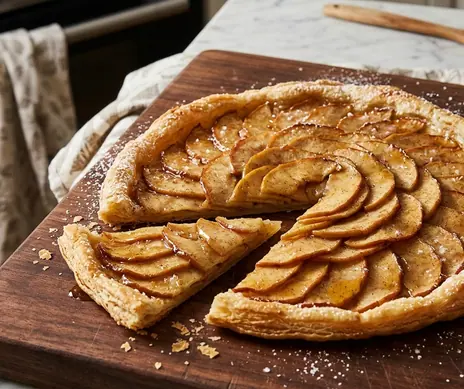
Because the fruit layer is so shallow, everything about this tart happens at the surface. The apple edges brown and curl, the slices stay delicate, and the pastry beneath them crackles. Pastry chefs who care about that snap assemble it to order, docking the puff pastry and shingling the raw fruit just before it goes into the deck oven.
Where tarte Tatin stacks a deep layer of braised apple, tarte fine spreads a single layer across a wide, flat crust. A thinner profile says nothing about calories, given the butter in laminated pastry. What it changes is texture: crispness becomes the point.
Eat It While It Snaps
The thin base has no moisture barrier, so it stays crisp for only 8 to 12 minutes after plating before fruit juices soften the layers. If you plan to linger over espresso for half an hour before touching dessert, especially with melting glace on the plate, order something sturdier.
Norman-Style Apple Custard Tart: Cream That Binds Fruit to Shell
The apple custard tart starts from three components: a blind-baked pâte sucrée shell, apple wedges, and an appareil of whole eggs, heavy cream, sugar, and sometimes a splash of Calvados or vanilla bean paste. The custard sets around the fruit and joins it to the crust, so the apples share the plate with the filling instead of carrying it alone.
Construction here comes down to proportion. Chefs match slice thickness to the depth of the tart ring so the poured custard surrounds the fruit without drowning the top edges, which stay exposed and brown in the oven. After baking, the tart cools on a wire rack for 45 to 60 minutes while the egg proteins fully set, which is why it slices cleanly and usually arrives at room temperature.
The apples supply acidity against the richness of cream and egg. How far that balance tips depends on the preparation: a tart apple and a restrained hand with sugar make a brighter slice, while vanilla and Calvados lean it softer and rounder.
Chausson aux Pommes: A Turnover for the Bakery Counter
The French apple turnover, or chausson aux pommes, is an enclosed puff-pastry pocket around soft, pre-cooked apple compote. Bakers fold the laminated dough over the filling and crimp the border so steam stays trapped inside, cooking the interior pastry walls without bursting the seam. The top is scored with a curved leaf pattern and brushed twice with egg-yolk glaze for a deep mahogany shine.
Biting in, you get browned, flaking outer layers giving way to a moist center. Turnovers cool for 15 to 20 minutes on perforated trays so the steam subsides and the compote steadies enough to eat by hand.
That portability places the chausson closer to the café than the dinner table. It belongs to the morning pastry case alongside croissants, and it suits a bakery stop during a Boston visit better than a plated finish to a long meal.
Four Apple Desserts by Crust, Fruit, and Finish
Rather than rank sweetness on a numerical scale, this comparison groups each dessert by how it delivers fat and sugar through its structure.
| Dessert | Pastry texture | Apple texture | Flavor emphasis | Best suits |
|---|---|---|---|---|
| Tarte Tatin | Firm base, softened where caramel meets it | Tender, deeply braised pieces | Dark caramel, rich with a bitter edge | Diners who want caramel-led richness |
| Tarte fine | Thin, crisp puff pastry | Delicate shaved slices, browned edges | Baked fruit and butter | Diners who want crispness and eat promptly |
| Apple custard tart | Short, sweet pâte sucrée shell | Wedges held in set custard | Cream and egg balanced by apple acidity | Diners who want a softer, creamy finish |
| French apple turnover | Enclosed, flaky laminated layers | Soft compote | Glazed pastry and gentle fruit | A café or bakery stop, eaten by hand |
Timing matters as much as taste. A baked-to-order tart needs 15 to 25 minutes of kitchen lead time, which is why experienced servers often ask about dessert when you order the main course.
Ordering the Right Apple Dessert After a Brasserie Dinner
The decision path is short:
- Tarte Tatin if you want caramel.
- Tarte fine if you want crispness.
- Apple custard tart if you want creaminess.
- A turnover if you want flaky pastry, ideally the next morning at a bakery.
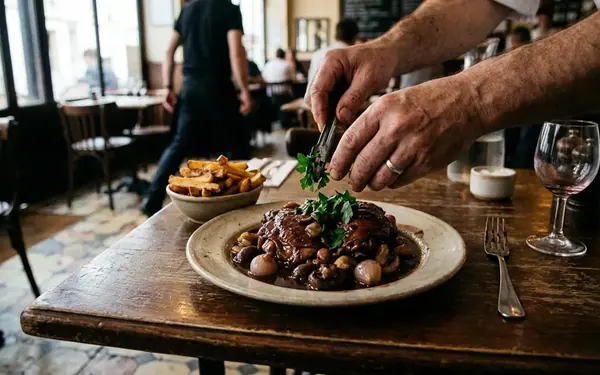
Let the meal you have already eaten guide the portion. After boeuf bourguignon or duck confit, a shallow, crisp puff pastry tart avoids the palate fatigue a dense, egg-set custard can bring. After grilled fish and a glass of white, the custard tart may feel exactly right.
When the dessert menu arrives, ask your server whether the apple dessert is baked to order, reheated, or sliced cold from the pastry case, then order the texture you most want to finish on.
Your Comment