
A leisurely French meal and a fixed curtain time share the same evening, but only one can run late. When you pair dinner with an evening performance in Boston, you are managing two competing clocks: the hospitable, unhurried rhythm of French brasserie culture and the rigid, unforgiving countdown of a stage manager.
Boston's Dinner-and-Theater Tradition Runs on Two Clocks
Dining before an evening performance grew naturally around the physical proximity of urban theaters and neighborhood dining rooms. In Boston, historic theater corridors along Washington and Tremont Streets developed alongside compact dining spaces where bistro tables and bar seating accommodated ticket holders before evening performances. Today, standard Boston evening curtain times cluster between 7:00 p.m. and 8:00 p.m., which compresses the entire pre-show dining window into the first 90 to 120 minutes of dinner service.
That compression creates a classic urban dining dilemma. You can book a table right next to the performance venue to minimize travel, or you can make a separate restaurant destination—such as a classic dining room in Back Bay or along Newbury Street—an anchor of your evening. Either way, relying on a static list of supposedly fast restaurants fails in practice, because kitchen staffing and evening ticket volume alter dining room pacing from night to night.
Instead of hoping a busy kitchen moves quickly, build a backward-scheduling calculation that protects both your meal and your theater seats.
Start With Your Theater Seat, Then Set Dinner Time
A calm evening begins by anchoring your schedule to your physical theater seat rather than the front doors of the building. Before browsing menus, open your ticket confirmation and verify four specific details: the performance date, the exact curtain time, the designated street entrance, and any venue arrival instructions regarding lobby door opening times or security bag-check parameters.
Curtain time is when the house lights dim, which differs substantially from the time you should cross the threshold of the venue. Allowing 25 to 35 minutes before curtain time leaves room for digital ticket scanning, security screening where applicable, coat check queues, restroom visits, and navigating the narrow balcony staircases common in historic Boston houses. Meanwhile, for a two-course brasserie meal for two people, plan on 75 to 95 minutes from seating to check settlement.
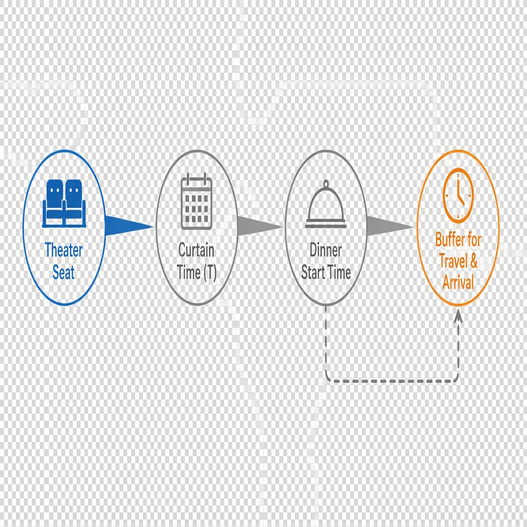
The Backward-Scheduling Formula
To find your target reservation slot without guessing, apply a reusable subtraction sequence:
- Start with Curtain Time: Your immovable anchor.
- Minus Venue-Arrival Allowance: Subtract 25 to 35 minutes to clear security, check coats, and find your row.
- Minus Restaurant-to-Venue Travel: Subtract the verified door-to-door transit or walking time.
- Minus Disruption Buffer: Subtract 10 to 15 minutes for crosswalk signals, weather, or street congestion.
- Minus Planned Meal Duration: Subtract 75 to 95 minutes for a composed two-course dinner.
- Equals Reservation Time: The actual hour you must be seated at your table.
Choose Between a Theater-District Table and a Back Bay Dinner
Once you know how much time your evening requires, you have to weigh neighborhood atmosphere against transfer logistics. Booking a restaurant blocks away from your venue reduces the transfer burden between check settlement and lobby entry. On the other hand, starting your evening in Back Bay suits diners seeking traditional seasonal French cuisine and a quieter room, provided you account for a separately checked route.
I once watched a couple at a neighboring table on Boylston Street order a second bottle of Sancerre at 6:45 p.m. for a 7:30 p.m. show, assuming that being a quick cab ride away meant ten minutes door to door. They forgot about the one-way traffic grid near Stuart Street and evening pedestrian bottlenecks, turning the end of a lovely dinner into a frantic scramble for the check. Neighborhood labels alone never establish a comfortable transfer time; you must map the exact restaurant entrance to the exact theater entrance.
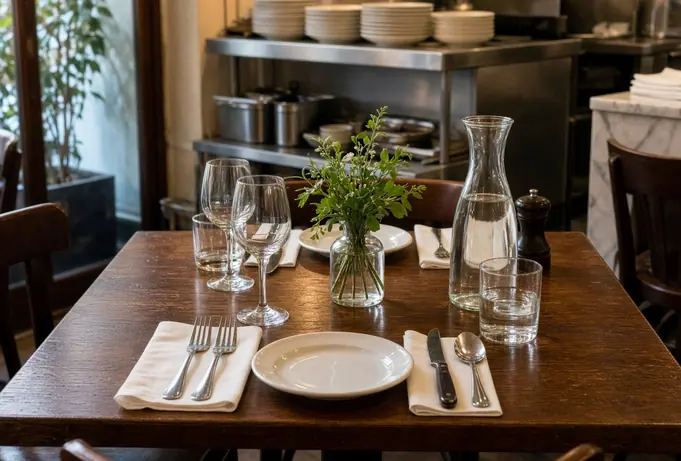
A Back Bay brasserie along Boylston or Newbury Street may sit 0.6 to 1.1 miles from Theater District entrances, translating to a 12-to-22-minute walk depending on Boylston Street crosswalk signals. Adding a 10-to-15-minute weather and transit buffer protects the transfer window against winter slush, rain, subway platform delays, or one-way traffic congestion near Tremont and Stuart Streets. When evaluating walking, Green Line transit, or a car ride, weigh route complexity, weather exposure, waiting intervals, and drop-off access directly outside the venue rather than assuming a car is fastest during peak curtain traffic. Keep in mind that these routing and buffer calculations serve strictly as an evening scheduling framework and do not represent verified current menus, real-time restaurant table inventory, active transit advisories, or guaranteed travel times.
Ask About Your Departure Time Before You Reserve
Securing a reservation slot online only confirms that the restaurant's booking software had an opening. Before finalizing your plans, call the host stand to verify how the dining room operates during the early turn. Frame the conversation around the exact minute you need to walk out the door rather than when your show starts.
Brasserie Booking Script: "We have a performance at [curtain time] and need to leave your restaurant by [departure time]. Is [reservation time] realistic for the meal we have in mind?"
During that brief phone call, clarify three operational details with the host:
- Seating Punctuality: Ask whether a reservation at your target hour usually means immediate seating or whether a lobby wait is possible for your intended party size. Many dining rooms enforce a full-party seating policy and hold reserved tables for only 10 to 15 minutes before releasing the slot or shortening the service window.
- Pre-Theater Menu Availability: Confirm whether an early or pre-theater menu is offered on your specific date and what courses it includes.
- Kitchen Pacing Limits: Ask if the kitchen recommends a particular ordering sequence for ticket holders. Multi-course tasting menus and large-format shared dishes can require 45 to 60 minutes of kitchen firing time alone, making pre-booking confirmation essential.
Order a Brasserie Meal That Fits the Evening
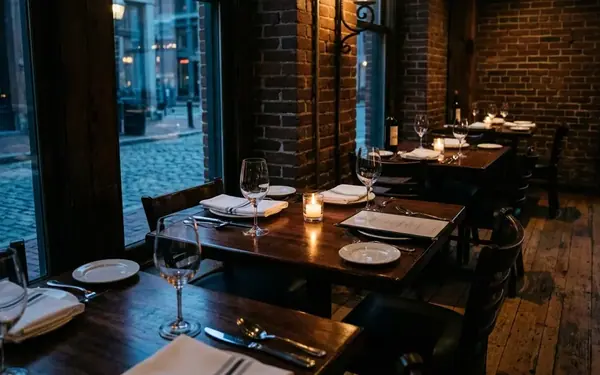
A crisp glass of Muscadet alongside chilled oysters or a bowl of rich onion soup sets an immediate sense of occasion as soon as you settle into a leather banquette. To keep that relaxed energy intact, tell your server your firm restaurant departure time the moment you are seated—explicitly distinguishing it from your curtain time—and ask whether the courses you are eyeing fit comfortably inside that window.
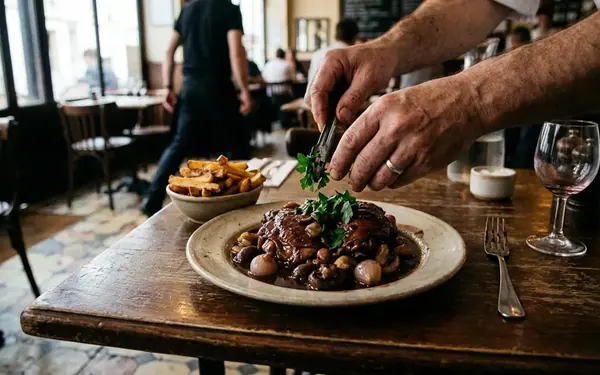
Aiming to place the complete food and beverage order within 10 to 12 minutes of sitting down helps keep the table's ticket from stalling behind larger parties seated at the same reservation interval. In a French brasserie, dish titles alone do not dictate preparation speed. A starter of soup or salad, a composed main course, or a classic dessert may suit different appetites, and some braised dishes emerge rapidly while certain roasted proteins, soufflés, or items described as cooked to order or shared require advance preparation. Choose your main course promptly and ask your server about firing times before committing.
Apply the same decisiveness to the wine list. Selecting wine by the glass, a rapidly chosen bottle, or a complex nonalcoholic aperitif at the time of the food order can avoid a separate sommelier consultation lasting 10 to 15 minutes. If you are ordering two courses, pair by-the-glass pours straight through—such as a mineral Chablis with a seafood starter and a medium-bodied Chinon ordered concurrently for a duck confit main—so your glasses arrive in step with the kitchen. Requesting the check alongside the main course clearing or before ordering coffee can leave 8 to 12 minutes for payment before departure.
If Dinner Slips, Shorten the Meal Before the Journey
Even well-planned evenings encounter unexpected snags: a late-arriving dining companion, a backed-up garde-manger station, or a sudden shift change on the floor. If seating or table service falls behind schedule, absorb the delay inside the dining room rather than trying to make up lost minutes on the sidewalks of Boston.
Establish a firm decision point before dessert by checking the time 25 to 30 minutes prior to your targeted restaurant departure time. Compare the actual time against your planned exit. If the main course ran late, ask your server which remaining choices are realistic within your remaining minutes instead of assuming that mentioning theater tickets will accelerate the pastry station.
When the clock is tight, drop an optional final course, decline an after-dinner digestif, and ask for the bill immediately. Never attempt to recover dining room delays by counting on a risky cross-town transfer or arriving after the performance starts. Historic auditoriums enforce strict late-seating holds that can keep latecomers waiting in the lobby for the first 15 to 25 minutes of the performance until a designated scene break.
Copy This Plan for a 7:30 p.m. Curtain
To see how this framework operates on an actual night out, walk through a hypothetical two-person scenario. Set the following scenario assumptions—treating them strictly as planning inputs rather than measured Boston averages or venue rules: you hold two tickets for a 7:30 p.m. performance, you want to reach the venue entrance by 7:00 p.m., and you have mapped the exact door-to-door route from your chosen Back Bay brasserie to the theater entrance as a 15-minute walk.
Break down the 150-minute pre-curtain window into four distinct blocks: 95 minutes at the brasserie table, 10 minutes of transfer contingency, 15 minutes of door-to-door walking, and 30 minutes for theater lobby entry and seating. Working backward from the 7:30 p.m. curtain, subtract 30 minutes for venue arrival (7:00 p.m.), subtract 15 minutes for the checked walk (6:45 p.m.), subtract 10 minutes for transfer contingency (giving you a firm 6:35 p.m. restaurant departure), and subtract 95 minutes for dinner. That calculation produces a 5:00 p.m. reservation.
Before booking, call the restaurant to confirm that dinner service starts at 5:00 p.m. and ask whether a two-course meal is realistic with a firm 6:35 p.m. exit. Once confirmed, copy these exact pacing milestones for the table:
- 5:00 p.m. — Seating and Server Briefing: Arrive on time, take your seats, and let the server know you need to walk out the door at 6:35 p.m.
- 5:10 p.m., Complete Order Placed: Order starters, mains, and your wine by the glass or bottle together so the ticket enters the kitchen's first wave.
- 5:25 p.m., Starter Served: Enjoy your first course and opening glasses of wine at an unhurried pace.
- 5:45 p.m., Main Course Arrives: Main plates hit the table with a full 50 minutes remaining before departure.
- 6:05 p.m., Dessert Decision Point: Anchor the entire evening's cutoff to the 6:05 p.m. dessert decision point, where any kitchen delay requires dropping the final course and settling the check to protect the 6:35 p.m. restaurant exit.
- 6:15 p.m., Bill Requested: Ask for the check while finishing espresso or dessert.
- 6:25 p.m., Payment Settled: Process the card and gather coats.
- 6:35 p.m., Restaurant Exit: Step onto the sidewalk with 25 minutes in hand for a calm, 15-minute stroll to the theater doors by 7:00 p.m.


Your Comment