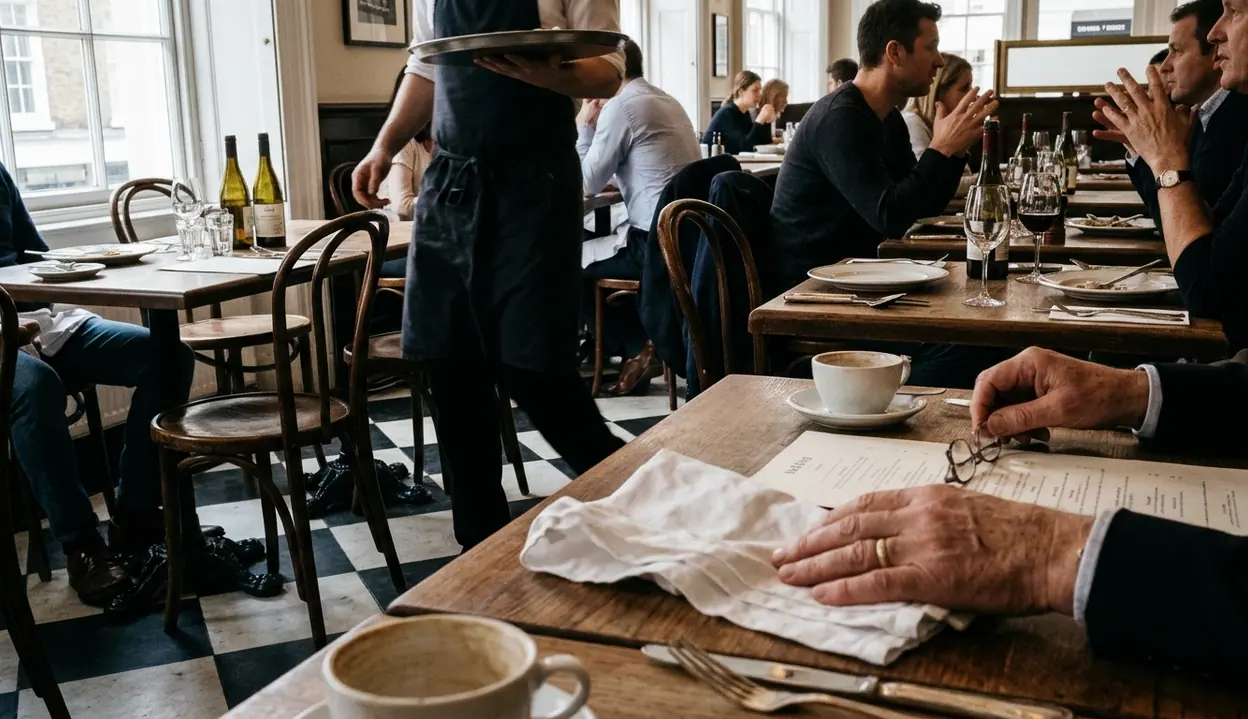
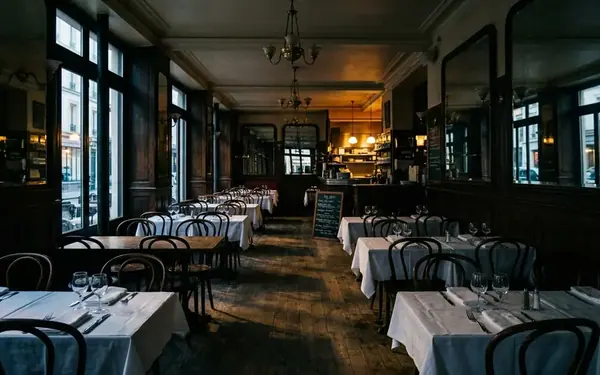
Four seating settings frame this guide: the bar, the banquette, the sidewalk table, and the main dining room. Stepping into a French brasserie without matching your evening's goal to the room's physical layout invites immediate friction. A couple looking for quiet conversation takes two stools near the service well, spending the next hour shouting over ice shakers and glassware. Meanwhile, a solo guest wanting a single glass of Muscadet accepts a center dining room table, unintentionally locking up a space set for a multi-course dinner.
Choose your seat based on the exact experience and timing you want, then state those intentions aloud. Furniture alone never dictates service speed. Standard Boston dinner reservation blocks typically run 90 to 120 minutes for two-top and four-top tables. When you align your physical spot with your clock from the first minute, the floor staff can adjust their pacing to match your night.
Match the Bar, Banquette, or Sidewalk Table to Your Meal
Every zone in a brasserie carries distinct acoustic reflections, foot traffic patterns, and operational trade-offs. Evaluating these mechanics before you sit prevents mid-meal frustration.
The Bar Counter
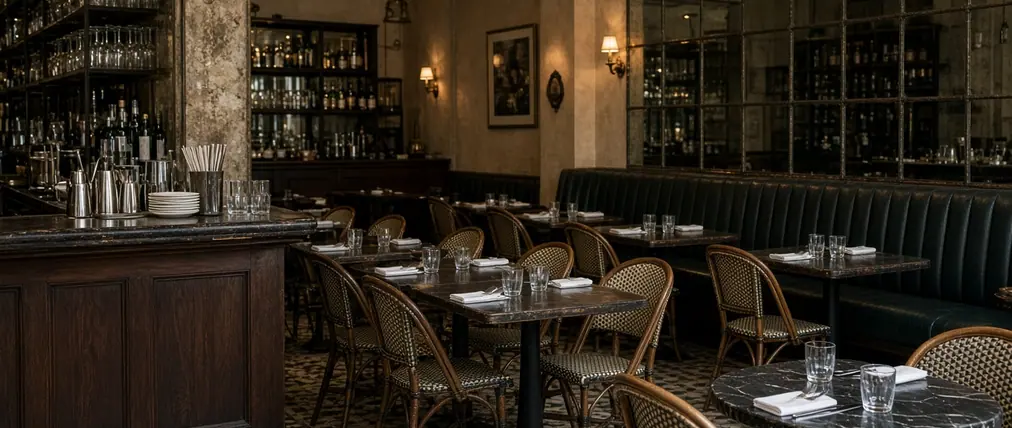
Atmosphere and Advantages: The bar anchors the room's energy, placing you right beside the espresso machines, draft lines, and bartender prep stations. It suits solo dining, an unscheduled aperitif, or guests who enjoy watching the mechanics of beverage service up close.
Possible Friction: Proximity to the bartender does not guarantee instant service or full menu access. When the service well backs up with dining room drink tickets, the bartender must split focus between counter guests and floor servers. Counter overhang and high stools also limit comfort during long meals.
What to Ask Before Sitting: Ask whether the bar serves the full dinner menu and whether drinks-only visits are welcome during peak dinner hours.
The Banquette
Atmosphere and Advantages: A leather or velvet banquette offers a settled, anchored vantage point facing outward into the room. It naturally supports a longer supper and relaxed wine pairings.
Possible Friction: Banquette seating commonly places neighboring two-top tables roughly 6 to 12 inches apart along a shared upholstered bench, sharing conversation acoustics. Hard plaster walls behind the bench bounce voices directly sideways, while servers must reach across the front table edge to clear plates.
What to Ask Before Sitting: Ask whether an end-cap table on the bench is open to reduce neighbors on one side.
The Sidewalk Table
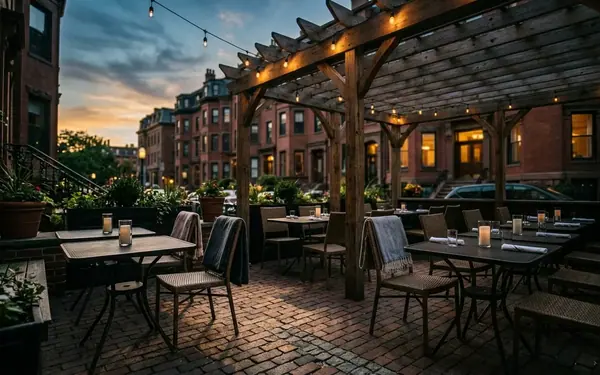
Atmosphere and Advantages: Along Back Bay & Newbury Street corridors, outdoor bistro tables offer prime people-watching and open air. Back Bay sidewalk patio operations generally run from April through October, subject to municipal permit hours and sudden weather shifts.
Possible Friction: Coastal wind gusts or temperatures below 55 degrees Fahrenheit rapidly cool down warm seasonal French cuisine. Servers also cover longer walking distances from the kitchen doors to the curb, which stretches the time between requests and table delivery.
What to Ask Before Sitting: Ask whether wind screens or heaters are running and whether an indoor backup table exists if the weather drops.
The Main Dining Room
Atmosphere and Advantages: Freestanding four-tops and center two-tops give every diner an individual chair and wider table spacing. This layout gives servers 360-degree access for decanting wine and plating shared dishes.
Possible Friction: Main floor tables sit directly along primary server circulation routes between the kitchen line and the front door. Constant movement behind your chair can distract from an intimate dining occasion.
What to Ask Before Sitting: Ask for a table tucked away from the kitchen swinging doors and main bussing stations.
| Seating Zone | Atmosphere & Acoustic Profile | Best Visit Format | Potential Friction | What to Ask the Host |
|---|---|---|---|---|
| The Bar | High energy, immediate proximity to shakers, espresso machines, and service well chatter | Solo dining, quick aperitif, unreserved drop-ins | Bartenders split attention with floor drink tickets; limited legroom | "Do you serve the full food menu at the bar, or is it set for drinks and small plates?" |
| The Banquette | Anchored wall seating facing the room; shared bench acoustics | Multi-course supper, date nights, wine-focused evenings | Tables sit about 6 to 12 inches apart; close proximity to neighboring conversations | "Is there a banquette spot near the end of the row with a bit more space for conversation?" |
| Sidewalk Table | Open-air street energy, ambient traffic and pedestrian noise (April–October) | Afternoon glass of rosé, casual light meals, warm-weather dining | Coastal wind and sub-55°F temps cool food rapidly; longer server transit from kitchen | "How is the wind on the patio tonight, and do full dinner courses hold their heat outside?" |
| Main Dining Room | Classic brasserie bustle, freestanding chairs, full room visibility | Groups of three or four, celebratory dinners, structured course pacing | Direct exposure to server circulation lanes and bussing traffic | "Could we sit away from the kitchen pass and main server walkways?" |
Tell the Host What Your Evening Requires
Walking up to the host stand and asking for a "nice table for two" forces the staff to guess your priorities. Instead, treat your arrival as a quick operational briefing. Host stand seating assignments account for server station balancing, typically capping active arrivals at 3 to 4 tables per server within a 15-minute window.
Follow a strict four-part sequence when you check in:
- State your exact party size.
- Specify whether you are staying for drinks and snacks or a full dinner.
- Share any hard departure deadline immediately.
- Ask which open seating zone best fits those conditions.
Clear phrasing removes awkwardness at the door. If you want a light bite, say: "We would like an aperitif and a small plate; is the bar suitable, or do you have a sidewalk table open for a short visit?"
Pre-performance diners in Boston generally require a seated-to-paid window of 45 to 60 minutes to make curtain times. When a concert or theater curtain dictates your schedule, state it before menus hit the table: "We need to leave by 7:15 PM for a performance; which seating section moves fastest, and what would you recommend ordering?"
For an unhurried supper, never treat an endless table hold as an unspoken right. Ask directly: "We are hoping for a relaxed three-course dinner; are there any time limits on this table tonight?" Knowing early that the host needs the table back in 90 minutes lets you either adjust your ordering tempo or shift to the bar for dessert and digestifs.
Keep in mind that seating reassignments at the door depend entirely on unreserved inventory; during peak Friday and Saturday dinner shifts between 6:30 PM and 8:30 PM, alternative tables away from service stations or entrances are rarely open without prior booking notes.
Set the Pace Before the First Course Arrives
A classic French brasserie meal follows a natural rhythm: aperitif, menu selection, first course, main course, dessert or coffee, and the check. Treat this sequence as a flexible framework rather than a rigid script. Kitchen workload, dish preparation methods, and ticket volume dictate when plates actually leave the pass.
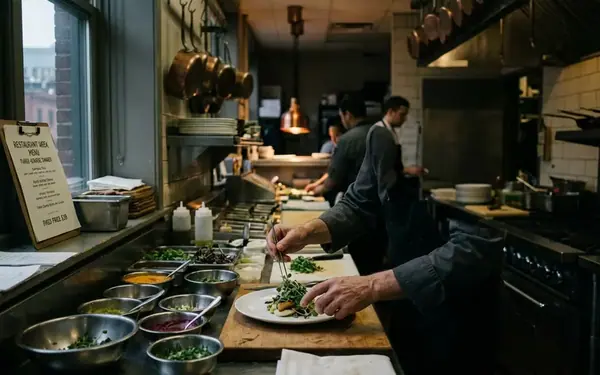
Station mechanics explain why some tables eat within minutes while others wait. Cold raw bar items and charcuterie boards typically clear the garde-manger station in 5 to 10 minutes, whereas braised or roasted main courses require around 20 to 35 minutes of kitchen ticket time. When you order oysters followed by duck confit, the kitchen expeditor holds the hot main ticket until the cold plates are cleared.
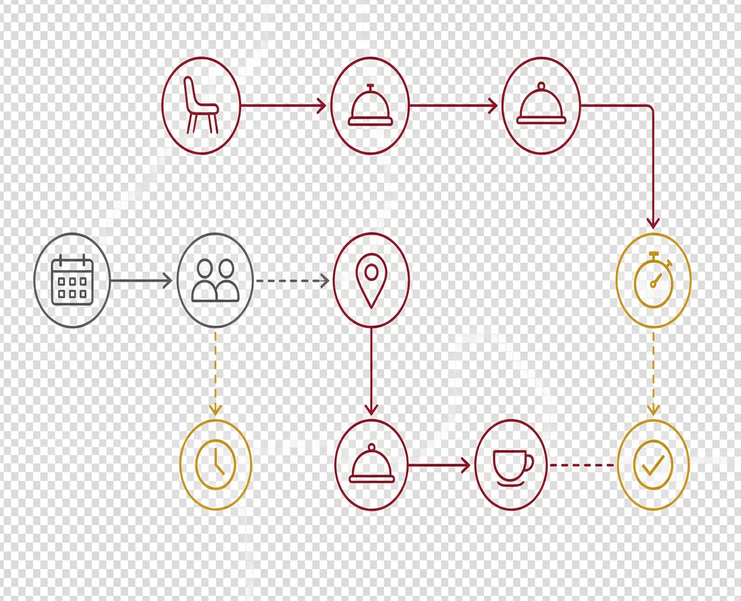
Control this timeline during your initial drink order. If you are on a tight schedule, ask the server which hot dishes require minimal pickup time, keep the order to one or two courses, and reiterate your departure time before handing back the menu. Would firing everything together, rather than coursing it out, better fit your departure time?
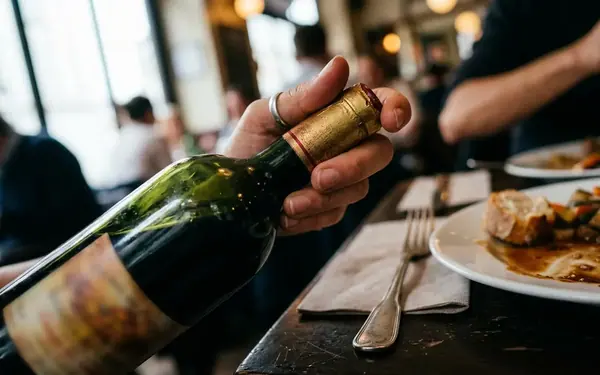
Pacing Your Wine Service: Explicitly requesting a glass of wine to arrive alongside the main course prevents the roughly 15-to-25-minute gap where a glass poured at ordering warms before the entree lands. Tell your server: "Please bring the Sancerre with the oysters now, and hold the Pinot Noir until the steak comes out."
Use Clear Requests Instead of Guessing at Table Signals
Traditional dining guides often claim that placing your knife and fork parallel at the four-o'clock position tells any server you are finished, while crossing them means you are resting. In a busy Boston dining room, relying on silverware geometry leads to frustration. Bussers clearing tables at high speed look for empty plates and pushed-back chairs, while servers scanning a roughly six-table section read body language from about twenty feet away.
Replace silent cues with brief, direct communication:
- Catching attention: Make calm eye contact with your server or a passing floor manager as they scan the room, or offer a polite verbal request when they step to a neighboring table.
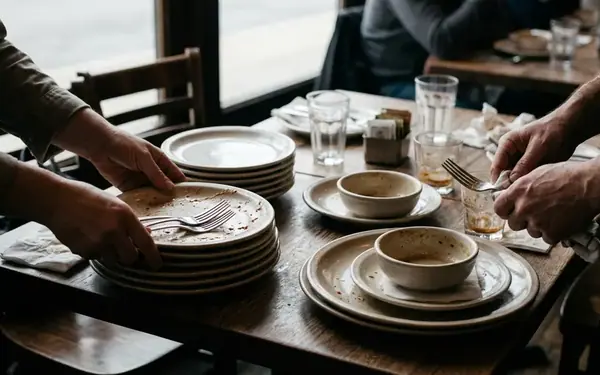
- Clearing plates: If you pause midway through a rich cassoulet, tell a passing staff member, "I am still working on this, thank you," or conversely, "We are finished whenever you have a hand."
- Securing the check: Completing payment—from requesting the folio to processing a card and signing—requires around 5 to 10 minutes during peak dining room turns. Ask for the bill while finishing your last sips of coffee or wine rather than waiting until your coat is on.
Table Transfer Etiquette: Never slide over to an empty neighboring table without asking the host or your server first. Moving to an open table without host clearance disrupts point-of-sale seat mapping and server section assignments, which are balanced across 4 to 6 table groups per staff member. A quick check ensures the new spot isn't holding for an incoming reservation and transfers your tab cleanly in the computer system.
Plan a Quick Aperitif or a Leisurely Supper
Consider two hypothetical visits with different seating and pacing needs.
Hypothetical Walkthrough 1: The Quick Aperitif
A solo diner steps in at 5:30 PM on a brisk autumn evening with forty minutes to spare before an evening train. The visit spans 30 to 45 minutes from bar seating to final payment, with a single cold small plate and the check requested upon delivery.
- At the Host Stand: The guest notes that the outdoor temperature has dipped below 55 degrees Fahrenheit, ruling out the sidewalk patio. They tell the host: "Just one for a glass of wine and a quick snack; I need to be out in forty minutes. Is the bar open for a quick bite?"
- At the Seat: Settling onto a bar stool away from the busy service well, the guest orders a dry vermouth and a plate of country pâté—allowing 5 to 10 minutes for the cold garde-manger order.
- Managing the Close: As the bartender sets down the pâté and bread, the guest asks for the check to be dropped alongside the plate. Paying early leaves twenty-five uninterrupted minutes to enjoy the food and drink before walking out on schedule.
Hypothetical Walkthrough 2: The Leisurely Supper
Two friends arrive at 7:00 PM looking for a full three-course French meal and uninterrupted catch-up time. They allow 105 to 135 minutes for supper, requesting a 15-minute pause between the first course clearing and the main course firing.
- At the Host Stand: The guests check in for their reservation and say: "We are here for a full three-course dinner and would love a spot where it's easy to talk. Do you have an end banquette or a quieter dining room table, and is there a time limit on our reservation?"
- Setting the Tempo: Once seated at a corner dining room two-top away from the kitchen pass, they order Crémant to start. When placing the food order ten minutes later, they tell the server: "We aren't in a rush tonight. Could we have 15 minutes of breathing room after the escargots are cleared before our main courses come out, and have our red wine glasses poured with the mains?"
- Winding Down: Because they checked the 120-minute reservation window at arrival, they know when the table is needed next. When dessert menus arrive at the 90-minute mark, they order espresso and crème brûlée together, settling the folio comfortably within the restaurant's turn schedule.
Choose What Matters Most Before You Sit Down
Before your hand touches the brass handle of the front door, run through a fast three-step filter: define the visit's purpose (drinks or full meal), name one primary physical condition (back support, quiet corner, or street view), and state the time boundary. Delivering this three-part summary takes close to 10 to 15 seconds at the host stand and helps avoid mid-meal table transfers or rushed check requests.
Keep this single sentence ready for your next visit: "We are here for [drinks or dinner], would prefer [seating need], and would like to [finish by a deadline or take our time]."
On your next night out in Boston, will you let the first open table dictate your evening's tempo, or will you set the terms at the host stand before you sit down?
Your Comment